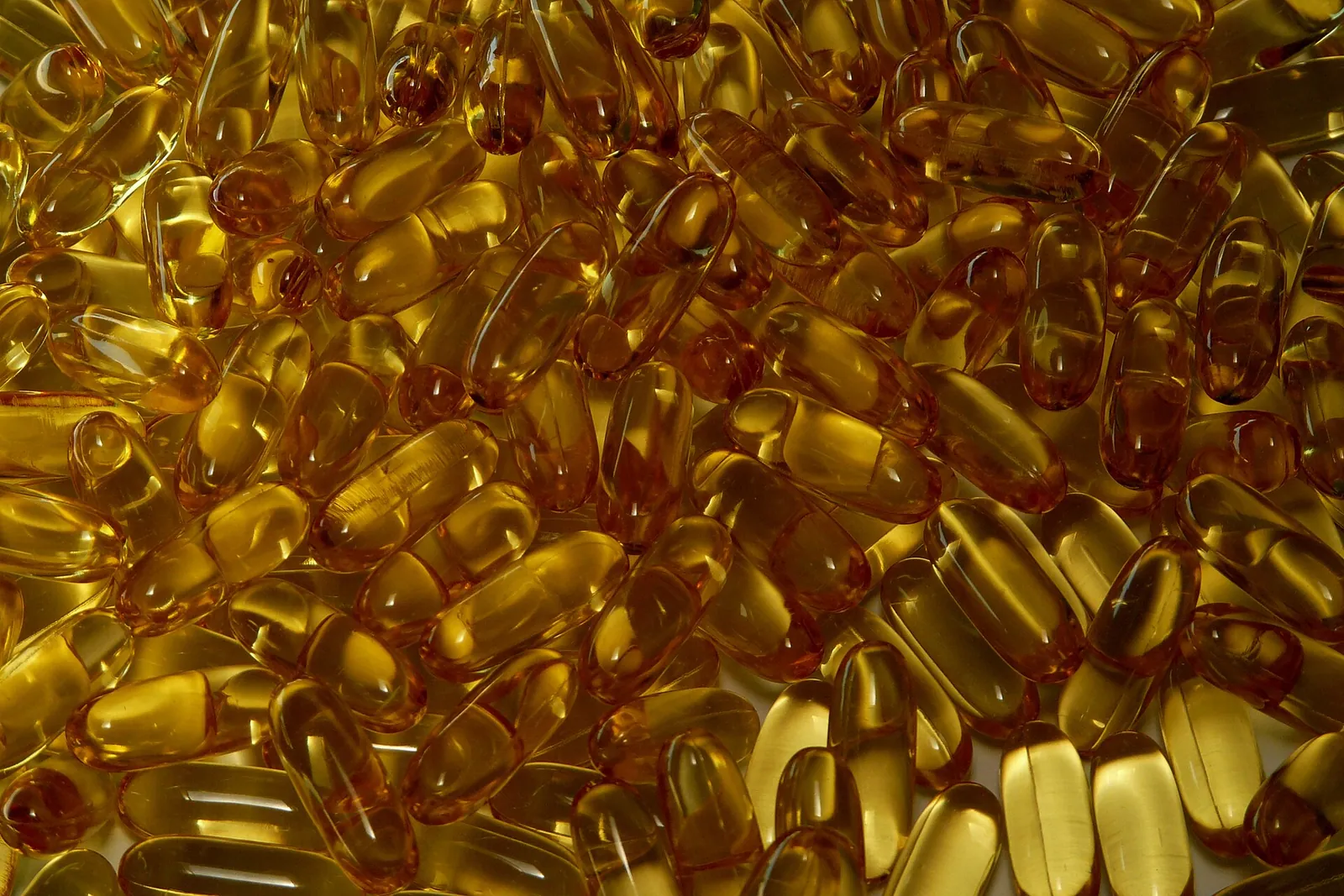
Photo: Fish Oil Capsules.jpg by Oddman47, CC0, via Wikimedia Commons. Cropped and colour-muted for display.
Section 6·31 items·9 October 2026
The Counter-List
things that look like good value for cost but actually aren't, including the claim that “willpower runs out”, relying on learning lifting technique to prevent back pain, loading up on calcium and drinking bone broth after a fracture, and relying on AI chatbots to judge your own medical and legal problems.
A 17B 11C 3
Lifespan 11Time and energy 1Money 1915 contested
This section collects things that “look cheap and effective.” Once you open the original research, their benefit is close to zero or equal to zero, and for some it is negative. The order depends on two things: how much money people spend on them, and how solid the evidence behind it is. The nearer the top, the more worth stopping first.
The items in this section are grouped by topic below; the numbers in parentheses are item numbers.
Health products and supplements: multivitamins (Item 1), ordinary fish oil (Item 2), vitamin D supplements (Item 3), antioxidant supplements to prevent cancer (Item 4), chondroitin for knee arthritis (Item 5), vitamin C to prevent colds (Item 6), spending big money on health products (Item 10), taking probiotics long term (Item 11), buying detox and colon-cleansing products (Item 13), loading up on calcium after a fracture (Item 30).
Checkups and the minor problems they turn up: whole-body PET-CT and tumor marker packages (Item 7), generic checkup packages (Item 18), high uric acid that has never caused pain: don't take medication (Item 19), gallstones that have never hurt: don't have them removed (Item 20), don't give up calcium to prevent kidney stones (Item 21).
Health-keeping claims: relying on a fitness band to help you lose weight (Item 8), buying organic food (Item 9), cold showers to boost immunity (Item 12), not forcing yourself to drink water (Item 14), blue-light-blocking glasses (Item 16), treating blood donation as a health measure (Item 17), eating breakfast or intermittent fasting to control weight (Item 26), relying on correct lifting posture to prevent back pain (Item 29).
Spending money on luck and mood: paying for fortune-telling and horoscopes (Item 15), buying objects like crystals and pixiu (貔貅) (Item 22), buying things to improve your mood (Item 23), spending more to move up one rung (Item 24).
Willpower and sex: willpower is like a muscle (Item 25), masturbation harms the body (Item 27), sexual orientation conversion (Item 28).
Answers given by AI: relying on an AI chatbot to judge your own condition (Item 31).
Sources are reproduced exactly as they appear in the Chinese original, including Chinese titles of laws and quoted statutory text. Original Chinese text of this section at upstream commit bb25081, on GitHub.
Don't take multivitamins to live longer or to prevent cardiovascular disease
ContestedValue for cost High
In plain terms
14,000 male doctors took multivitamins for eleven years. The number who had a major heart or blood-vessel event, and the number who died, were the same as among those who did not take them. Looking at 9 trials and more than 50,000 people together, no effect on death can be seen either. Not buying them saves you two hundred to seven hundred yuan a year. People found to be genuinely short of a particular nutrient, and pregnant women taking folic acid, are not covered by this item.
Cost
About 0.5 to 2 yuan a day, 200 to 700 yuan a year. Taking it costs no time; it is one pill. Take it for long and it is easy to come to depend on it, feeling that on a day you skip it you have left something undone.
No moneyDone in passingNo willpowerBenefit size medium
Benefit
The PHS II trial enrolled 14,641 male doctors and followed them for 11.2 years (this is the median: half were followed longer than this, half shorter). Those who took it and those who did not had the same rate of major heart and blood-vessel events. Major cardiovascular events HR 1.01 (HR is a risk ratio; 1 means the two groups are the same). 95% CI 0.91–1.10 is the confidence interval for this number. Death was the same too: all-cause mortality HR 0.94 (0.88–1.02). USPSTF, the US body that grades preventive measures, in 2022 pooled 9 randomized controlled trials with 51,550 people, and the result was that multivitamins had no association with all-cause mortality. Rating I, meaning the evidence is insufficient and no call can be made. It looks like a good deal because “one pill fills in every nutrient” sounds right, and it costs only a few tenths of a yuan a day
Evidence grade
A
Notes
Contested: cancer was also examined in the same group of male doctors. Those who took it had a cancer rate about 8% lower (0.86–0.998, P=0.04, just barely clearing the line of “unlikely to be chance”). Their rate of dying of cancer was about 12% lower (0.77–1.01). This range crosses 1, so it may be just chance. This benefit is small, and it has only been seen in male doctors. People found to be genuinely short of nutrients, pregnant women (taking folic acid), and people whose everyday diet is truly very lopsided are not included; they should supplement as their doctor says
Sources
Sesso HD et al. (2012). Multivitamins in the prevention of cardiovascular disease in men: the Physicians' Health Study II randomized controlled trial. JAMA. https://doi.org/10.1001/jama.2012.14805;US Preventive Services Task Force (2022). Vitamin, Mineral, and Multivitamin Supplementation to Prevent Cardiovascular Disease and Cancer. JAMA. https://doi.org/10.1001/jama.2022.8970;Gaziano JM 等 (2012). Multivitamins in the Prevention of Cancer in Men. JAMA. https://doi.org/10.1001/jama.2012.14641(备注里那项癌症结果)
Don't take ordinary fish oil to prevent cardiovascular disease
ContestedValue for cost High
In plain terms
Two large trials enrolled 26,000 people and 15,000 people with diabetes, respectively. Those who took 1 gram of fish oil a day had as many major heart and blood-vessel events, and as many deaths, as those who did not. “Eating fish is good for you” does not mean “taking fish-oil capsules is good for you.” Not buying it saves you four hundred to a thousand yuan a year.
Cost
About 1 to 3 yuan a day, 400 to 1000 yuan a year. Taking it costs no time.
No moneyDone in passingNo willpowerBenefit size medium
Benefit
The VITAL trial enrolled 25,871 people who took 1 gram of fish oil a day, and followed them for 5.3 years (median). No difference between the two groups was seen in major heart and blood-vessel events or in death. Major cardiovascular events HR 0.92 (HR is a risk ratio; 1 means the two groups are the same). 95% CI 0.80–1.06 is the confidence interval for this number. It crosses 1, which means no difference can be seen. All-cause mortality HR 1.02 (0.90–1.15). The ASCEND trial enrolled 15,480 people with diabetes, also at 1 gram a day, and followed them for an average of 7.4 years; it likewise saw no difference. Serious vascular events RR 0.97 (0.87–1.08). All-cause mortality RR 0.95 (0.86–1.05). It looks like a good deal because many people take “eating fish is good for you” to mean directly “taking fish-oil capsules is good for you”
Evidence grade
A
Notes
Contested: one trial did find an effect. The REDUCE-IT trial enrolled 8,179 people who already had cardiovascular disease or diabetes, were all taking statins, and still had high triglycerides (135–499 mg/dL). They took a prescription drug of 4 g of pure EPA a day, and the rate of events was 17.2% versus 22.0%. The risk was about a quarter lower (HR 0.75, 0.68–0.83). But that is a high-dose prescription drug given to high-risk patients; it is not the same as ordinary people taking fish-oil supplements. Eating fish itself is also not covered here
Sources
Manson JE et al. (2019). Marine n-3 Fatty Acids and Prevention of Cardiovascular Disease and Cancer. NEJM. https://doi.org/10.1056/NEJMoa1811403;ASCEND Study Collaborative Group (2018). Effects of n-3 Fatty Acid Supplements in Diabetes Mellitus. NEJM. https://doi.org/10.1056/NEJMoa1804989;Bhatt DL 等 (2019). Cardiovascular Risk Reduction with Icosapent Ethyl for Hypertriglyceridemia. New England Journal of Medicine. https://doi.org/10.1056/NEJMoa1812792(备注里那项高纯度处方鱼油试验)
Don't give vitamin D supplements to people who are not short of vitamin D in order to live longer
ContestedValue for cost High
In plain terms
In people who were not short of vitamin D to begin with, taking it for 5 years left the number who got cancer, the number who got cardiovascular disease and the number who died the same as among those who did not take it. People found to be genuinely short of it, people with osteoporosis, and people who get no sun for long periods are not covered by this item; they should supplement as their doctor says.
Cost
About 0.2 to 0.5 yuan a day, 100 to 200 yuan a year. The money is not much; the real cost is believing you have already done something to prevent disease.
No moneyDone in passingNo willpowerBenefit size medium
Benefit
The VITAL trial enrolled 25,871 people who took 2000 IU a day, and followed them for 5.3 years (median). No difference was seen in cancer, heart and blood-vessel problems, or death. Cancer of the kind that can spread HR 0.96 (HR is a risk ratio, 1 means the two groups are the same; 95% CI 0.88–1.06 is the confidence interval). Major cardiovascular events HR 0.97 (0.85–1.12). All-cause mortality HR 0.99 (0.87–1.12). The D-Health trial enrolled 21,315 Australians over 60. They took 60,000 IU a month and were followed for 5 years. This trial also saw no difference: all-cause mortality HR 1.04 (0.93–1.18). The share who died was 5.3% versus 5.1%. It looks like a good deal because some studies that only followed and recorded people, without any intervention, found that people with low vitamin D levels died more, and this was misread as “taking it will work”
Evidence grade
A
Notes
Contested: neither trial specifically recruited people who were truly short of vitamin D, so the conclusion only covers “people who were not short of it to begin with.” People found to be genuinely short of it, people with osteoporosis, people who get no sun for long periods, and infants and young children should still supplement as their doctor says. Only all-cause mortality, cancer, and heart and blood-vessel outcomes were looked at here; nothing else was
Sources
Manson JE et al. (2019). Vitamin D Supplements and Prevention of Cancer and Cardiovascular Disease. NEJM. https://doi.org/10.1056/NEJMoa1809944;Neale RE et al. (2022). The D-Health Trial: a randomised controlled trial of the effect of vitamin D on mortality. Lancet Diabetes Endocrinol. https://doi.org/10.1016/S2213-8587(21)00345-4
Don't take antioxidant supplements (β-carotene, vitamin E, vitamin A) to prevent cancer
Value for cost High
In plain terms
This one is not merely useless. Pooling 78 trials and nearly 300,000 people, those who took antioxidant supplements actually had a slightly higher death rate. In two large trials done specifically in smokers, β-carotene raised the rate of lung cancer by 18% to 28%, and death by 8% to 17%. Smokers and people who have been exposed to asbestos especially should not take them.
Cost
About 0.5 to 2 yuan a day. For smokers, the real cost is a risk of lung cancer that goes up along with it.
No moneyDone in passingNo willpowerBenefit size medium
Benefit
Cochrane pooled 78 randomized controlled trials with 296,707 people. For those who took antioxidant supplements, all-cause mortality RR 1.02 (RR is a risk ratio, 1 means the two groups are the same; 95% CI 0.98–1.05 is the confidence interval). Looking only at the trials with more rigorous designs that are less prone to bias, RR 1.04 (1.01–1.07), slightly higher. β-carotene alone RR 1.05 (1.01–1.09); vitamin E alone RR 1.03 (1.00–1.05). The ATBC trial enrolled 29,133 male smokers who took 20 mg a day; their rate of lung cancer was 18% higher (3%–36%) and all-cause mortality 8% higher (1%–16%). The CARET trial enrolled 18,314 smokers or people who had been exposed to asbestos. Their risk of lung cancer was about 28% higher (RR 1.28, 1.04–1.57). Their risk of death was about 17% higher (all-cause mortality RR 1.17, 1.03–1.33). It looks like a good deal because every step of the chain of reasoning “antioxidants fight aging, and fighting aging prevents cancer” sounds like common sense
Evidence grade
A
Notes
USPSTF, the official US body responsible for grading preventive measures, in 2022 gave β-carotene and vitamin E a grade D, meaning it recommends against using them. Smokers and people exposed to asbestos have already been harmed by them. The antioxidants naturally present in vegetables and fruit are not included; keep eating them
Sources
Bjelakovic G et al. (2012). Antioxidant supplements for prevention of mortality in healthy participants and patients with various diseases. Cochrane Database Syst Rev. https://doi.org/10.1002/14651858.CD007176.pub2;The Alpha-Tocopherol, Beta Carotene Cancer Prevention Study Group (1994). The effect of vitamin E and beta carotene on the incidence of lung cancer and other cancers in male smokers. NEJM. https://doi.org/10.1056/NEJM199404143301501;Omenn GS et al. (1996). Effects of a combination of beta carotene and vitamin A on lung cancer and cardiovascular disease. NEJM. https://doi.org/10.1056/NEJM199605023341802
Don't count on glucosamine or chondroitin to treat knee arthritis
ContestedValue for cost High
In plain terms
Among people with knee osteoarthritis who took a fake pill for 24 weeks, six in ten still said the pain had eased. Those who took glucosamine or chondroitin did only four or five percentage points better than that, so small it may be just chance. Spending seven hundred to eighteen hundred yuan a year basically buys you the psychological effect behind that six in ten.
Cost
About 2 to 5 yuan a day, 700 to 1800 yuan a year.
No moneyDone in passingNo willpowerBenefit size medium
Benefit
The GAIT trial enrolled 1,583 patients with knee osteoarthritis, who took the pills for 24 weeks. Among those who took the placebo (a fake pill), 60.1% also said their pain had eased. Glucosamine was only 3.9 percentage points higher than that (P=0.30). Chondroitin was 5.3 percentage points higher (P=0.17). The two taken together were 6.5 percentage points higher (P=0.09). These gaps are all too small to rule out that they are just chance. Celecoxib, a real drug used for comparison in the same trial, was 10.0 percentage points higher (P=0.008). It looks like a good deal because “the raw material for replenishing cartilage” sounds like exactly the right remedy, and on a fake pill alone, six in ten people already say it works
Evidence grade
A
Notes
Contested: in the same trial, among the people whose pain was severe from the start, the share who responded to the two taken together was 79.2%, versus 54.3% in the control group (P=0.002). But the authors say this was dug out of the data after the fact, and can only serve as a lead, not as a conclusion. What really has evidence for knee arthritis is losing weight and building muscle; see Section 2
Sources
Clegg DO et al. (2006). Glucosamine, chondroitin sulfate, and the two in combination for painful knee osteoarthritis. NEJM. https://doi.org/10.1056/NEJMoa052771
Taking vitamin C every day basically does not make you catch fewer colds, and starting it only once you have a cold works sometimes and not other times. Taking it every day can shorten a cold by about 8%, which is half a day less of feeling bad; whether that is worth three to five hundred yuan a year is for you to work out. Marathon runners and soldiers marching in cold regions are the exception: among them, half as many of those who took it caught a cold.
Cost
About 1 to 2 yuan per effervescent tablet, 300 to 700 yuan a year.
No moneyDone in passingNo willpowerBenefit size small
Benefit
Cochrane pooled 29 controlled trials with 11,306 people. For ordinary people taking vitamin C every day, the number of colds basically did not go down. Rate of catching a cold RR 0.97 (RR is a risk ratio, 1 means the two groups are the same). 95% CI 0.94–1.00 is the confidence interval. For the trials where people only started taking it after catching a cold, the original says “no consistent effect was seen”: some trials found it worked, some did not. In the same review, taking it every day over the long term shortened the time spent ill with a cold by about 8% (adults, 95% CI 3%–12%), and by 14% in children (7%–21%). Marathon runners, skiers and soldiers marching in cold regions are the exception. In 5 trials with 598 people, about half as many caught a cold. Incidence RR 0.48 (95% CI 0.35–0.64). It looks like a good deal because it is cheap, it tastes sweet and sour, and the claim “vitamin C prevents colds” has been passed around for half a century
Evidence grade
A
Notes
Contested: in the same review, taking it every day did shorten the time spent ill with a cold. By about 8% in adults (3%–12%), and by 14% in children (7%–21%). Worked out, that is about half a day less of illness per cold. Marathon runners, skiers and soldiers marching in cold regions are the exception. In 5 trials with 598 people, about half as many caught a cold (RR 0.48, 0.35–0.64). The vast majority of people belong to neither of these two groups
Don't get yourself a “whole-body PET-CT” or a “tumor marker package” when you have no symptoms
Value for cost High
In plain terms
When people with no symptoms get checked, what turns up most is a false alarm. More than eight in ten people who get a whole-body CT have at least one “abnormality” found, and nearly four in ten are called back for more tests, yet most of it is benign. Women screened with ovarian cancer markers actually died of ovarian cancer slightly more often, and some had an operation for nothing because of a false alarm.
Cost
A whole-body PET-CT costs about 7000 to 10000 yuan a time, and you also take a dose of ionizing radiation. A tumor marker package costs a few hundred yuan. The real cost comes later: an “abnormality” turns up that is actually a false alarm (this is called a false positive), and the follow-up scans, tissue sampling and surgery that come next are where the money and the suffering are.
No moneyDone in passingNo willpowerBenefit size medium
Benefit
USPSTF, the US body that grades preventive measures, gave screening women without symptoms for ovarian cancer with CA-125 and ultrasound a grade D, meaning it recommends against doing it. The basis is the PLCO trial. The share who died of ovarian cancer was 0.34% in the screening group and 0.29% in the usual-care group. RR 1.18 (95% CI 0.82–1.71). Getting checked brought no benefit. The share who went under the knife for nothing because of a wrong result (a false positive) was 0.2%–3.25% across trials, and of these people up to 15% had serious surgical complications. Another study gave whole-body CT screening to 1,192 people without symptoms. 86% of them had at least one “abnormality” found, and 37% were advised to have further tests. The original says “most findings were described as benign.” It looks like a good deal because “check the whole body at once, find it early and treat it early” fits intuition all too well
Evidence grade
A
Notes
The tumor marker part is backed by randomized controlled trials. The whole-body CT and PET-CT part has only follow-up records of the “look at what happened later to people who had it” kind, with no comparison groups; the evidence is one notch weaker, equivalent to grade B. The few screenings that do have real evidence, such as for colorectal cancer, cervical cancer and breast cancer, and low-dose chest CT for people at high risk, are another matter; see Section 1. PET-CT for people who already have symptoms or have already been diagnosed with cancer is medical care, not screening, and is a separate case
Don't count on the activity tracking of a fitness band or watch to help you lose weight
Value for cost High
In plain terms
Overweight people followed the same diet and exercise program; those who wore a fitness band lost 3.5 kg over two years, while those who did not actually lost 5.9 kg. If you want to lose weight, spending money on a device does not help; what really works is the exercise itself.
Cost
The device costs 200 to 2000 yuan. On top of that, you spend attention every day looking at the data.
No moneyDone in passingNo willpowerBenefit size medium
Benefit
The IDEA trial enrolled 471 adults with overweight or obesity and followed them for 24 months. Everyone followed the same diet and exercise program; the only difference was whether they wore a wearable device. The group that wore one lost 3.5 kg (95% CI 2.6–4.5, this is the confidence interval). The group that did not lost 5.9 kg (5.0–6.8), actually more. The difference between the two groups was 2.4 kg (1.0–3.7, P=0.002). It looks like a good deal because the saying “you can only manage what you measure” sounds reasonable, and you buy the device once and are done
Evidence grade
B
Notes
This is only one trial, and it used devices worn on the arm from the early 2010s, so it cannot be used to say “all wearable devices are useless.” Exercise itself works; see Section 2. The conclusion is just one sentence: if you want to lose weight, a device is not money you have to spend
Sources
Jakicic JM et al. (2016). Effect of Wearable Technology Combined With a Lifestyle Intervention on Long-term Weight Loss: The IDEA Randomized Clinical Trial. JAMA. https://doi.org/10.1001/jama.2016.12858
Don't pay a premium for organic food to be “healthier”
Value for cost High
In plain terms
There is no strong evidence that organic food is more nutritious. Only 3 studies actually looked at how people's health turned out after eating it, and none of them saw a difference. Organic produce is indeed 30 percentage points less likely to have pesticide residues detected, but detected does not mean over the limit. Eating more vegetables and fruit is useful in itself, and whether they are organic does not affect that.
Cost
Usually 1 to 3 times the price of the same kind of ordinary food.
No moneyDone in passingNo willpowerBenefit size medium
Benefit
A systematic review looked at 17 studies done in people and 223 studies measuring the composition of food together. Its conclusion was that “there is a lack of strong evidence that organic foods are significantly more nutritious than conventional foods.” Only 3 of these studies looked at how people's health turned out after eating (they looked at allergies and infections with symptoms), and no difference was seen between the two sides. Organic produce was 30 percentage points less likely to have pesticide residues detected, but detected does not mean over the limit. It looks like a good deal because every step of “no pesticides means safer, and safer means healthier” sounds like common sense
Evidence grade
B
Notes
Studies that directly look at how people's health turns out after eating it are very few. So the conclusion is “there is no evidence that it is better,” not “it has been proven to have no benefit.” The effect on the environment, animal welfare and whether it tastes better are not dealt with here. Eating more vegetables and fruit works in itself, and whether they are organic does not affect that
Don't spend big money on health products, herbal pastes (gaofang, 膏方) and tonics to “tune up your body”
Value for cost Very high
In plain terms
Common ingredients such as multivitamins, fish oil and vitamin D have already been checked one by one in the first six items of this section, and none was seen to work. The line on the package, “Health food is not medicine and cannot replace medicine in treating disease,” must be printed by rule of the authority that regulates health food. This money is mostly spent on gifts for parents, carried along on a visit; there is nothing wrong with the thought behind it, it is only that the wrong thing was chosen.
Cost
Anywhere from a few hundred yuan to ten thousand or more. Once made into gift packs, the price often goes up several times over.
No moneyDone in passingNo willpowerBenefit size large
Benefit
What you get back is the money you save. The reasons are in the first 6 items of this section: the most common ingredients in health products, namely multivitamins, fish oil, vitamin D, antioxidants, glucosamine and vitamin C, showed none of the expected benefits in randomized controlled trials, and the numbers for each are in the Benefit fields of those 6 items. The regulations only state what it is allowed to claim; they cannot be taken as evidence that it is useless. The State Administration for Market Regulation requires the front of health food packaging to carry, over an area of no less than 20%, the sentence: “Health food is not medicine and cannot replace medicine in treating disease.” The same rules also confine the uses of health food to the scope of “supplementing dietary nutrients, maintaining or improving the body's state of health, or reducing risk factors for disease.” It looks like a good deal because the line “it doesn't treat disease, it only tunes up the body” can never be called wrong however you say it, and no one can prove it false. And when you pay for it as a gift, what drives the spending is social obligation, not evidence
Evidence grade
C
Notes
The conclusion is “no evidence supports it,” not “it has been proven ineffective,” so it gets only grade C. For products that state their ingredients clearly, look up the matching studies under the earlier items. People found to be genuinely short of nutrients and people who are being treated for an illness should do as their doctor says. What is being rejected is the product, not the thought behind it. If an older person bought it themselves and is already taking it, as long as it is not standing in for medicine they take and has not caused problems, there is no need to go over and have that argument; getting the vaccines and screenings they should have arranged matters more. Spend the same money on the things below instead; for each of them you can find the source in this book. Take the older person to get the yearly flu vaccine; see Section 1, Item 20. For the shingles vaccine after age 50, see Section 1, Item 21. For the pneumococcal vaccine at 65 and over, see Section 1, Item 22. Buy a blood pressure monitor, and make sure they take their blood pressure medication fully as prescribed and bring their blood pressure down to target; see Section 1, Item 7. Make changes to the bathroom and stairs at home, and practice balance and leg strength with them; see Section 1, Item 13. For the cancer screening due at their age, go with them once to get it done; see Section 1, Items 17 to 19. If the older person is already bedridden long term, for pressure-sore prevention and long-term care insurance see Section 17, Items 7 and 8. If you want to bring something when you visit, fruit, rice and flour, or food they like are more practical than herbal pastes. What really needs to be stopped is two kinds of thing: elder-care investments where you pay money first, and anything that would stand in for medicine; see Section 17, Item 5
Don't take probiotics long term when you have no gut problems
Value for cost Standard
In plain terms
Looking at 45 trials in healthy adults together, taking probiotics does not change the bacteria in your gut for the long term: once you stop, they go back to how they were, and blood lipids do not improve either. Specific situations such as diarrhea from taking antibiotics have separate evidence and are not covered by this item.
Cost
About 2 to 5 yuan a day, 700 to 1800 yuan a year.
No moneyDone in passingNo willpowerBenefit size small
Benefit
A review looked at 45 trials in healthy adults together, and its conclusion was: “it could not be supported that probiotics can cause lasting changes in the gut microbiota, and they also failed to improve blood lipids in healthy adults.” The bacteria in the gut do change, but only temporarily; once you stop, they go back. It looks like a good deal because the term “gut health” is broad enough that it is never wrong however you apply it, and a bottle a day costs very little per unit
Evidence grade
B
Notes
The same review also reports some small improvements in healthy people, such as stools that are better formed and of the right firmness, and more lactobacilli in women's vaginas. Diarrhea caused by taking antibiotics, and a particular strain used for a particular disease, each have their own separate evidence and are another matter. This item is only about healthy people taking it every day as a health product
Don't force yourself to take cold showers to “boost your immunity”
ContestedValue for cost Standard
In plain terms
In a trial of 3018 people, those who took cold showers took sick leave 29% fewer times, but their total days of sick leave were the same as everyone else's, so it cannot be said they got sick less. In 2025, looking at 11 trials together, after rinsing in cold water the body's inflammation markers actually rose for a short time, and the immune markers did not change. If you like cold showers, take them as you please; just don't treat them as an investment in your health.
Cost
Costs nothing. You have to be uncomfortable for 30 to 90 seconds a day, and keeping it up in winter takes willpower. People with cardiovascular disease also need to be careful: the shock of cold carries risk for them.
No moneyDone in passingNo willpowerBenefit size small
Benefit
A randomized controlled trial in the Netherlands had 3,018 people finish a hot shower with 30, 60 or 90 seconds of cold water. These people took sick leave 29% fewer times (IRR 0.71, this is a ratio of counts). But the original states plainly that “there was no significant difference between groups in days of sick leave”: the total number of days ill was the same on both sides. Quality of life, work productivity and anxiety also showed no meaningful differences. In 2025 a systematic review pooled 11 randomized trials with 3,177 people. Right after cold-water immersion and 1 hour later, the body's inflammation markers actually went up. Immune markers did not change. Stress went down only at the 12-hour time point. The authors themselves say the evidence is “limited by few RCTs and small samples,” meaning there are too few of these randomized trials and each has few people. It looks like a good deal because it costs nothing, and the intuition “if it's hard, it works” goes down all too easily
Evidence grade
B
Notes
Contested: the number of times people took sick leave really did drop by 29%, and that gap does not look like chance. But the total number of days ill did not drop, so it looks more like “going to work as usual even when ill” than really getting ill less. Athletes using cold water to help them recover after training is a different question and is not dealt with here. Cold showers themselves do no harm to healthy people; just don't treat them as an investment in your health
Don't buy detox, colon-cleansing, enzyme or alkaline-water products and the like
Value for cost High
In plain terms
The detox industry has grown very large, but the clinical evidence supporting it is very thin, and no one has seriously tested the detox diets sold on the market. When someone checked whether the acidity of food, alkaline water and cancer are related, they found only 1 study good enough to count, and it showed no link either.
Cost
A few hundred to a few thousand yuan. The kind that “detoxes” by going hungry may also starve your blood sugar too low and leave you short of nutrients.
No moneyDone in passingNo willpowerBenefit size medium
Benefit
That review's conclusion was that “despite the booming detox industry, there is very little clinical evidence to support these diets,” and that “there are no randomized controlled trials of commercial detox diets.” Another systematic review looked specifically at whether dietary acid load, alkaline water and cancer are related: it went through 8,278 papers, only 1 was good enough to be included, and it also showed no link. The authors wrote that “promoting an alkaline diet and alkaline water to the public for the prevention or treatment of cancer is not justified.” It looks like a good deal because the two premises “there are toxins in the body that have to be flushed out” and “an acidic constitution causes cancer” sound a lot like physiology
Evidence grade
C
Notes
All we can say is “there is no evidence supporting it,” so it gets only grade C. Clearing out the waste that the body's metabolism produces is already the job of the liver and kidneys. As long as these two organs are not diseased, there is no need to do any extra “detox”
Sources
Klein AV, Kiat H (2015). Detox diets for toxin elimination and weight management: a critical review of the evidence. J Hum Nutr Diet. https://doi.org/10.1111/jhn.12286;Fenton TR, Huang T (2016). Systematic review of the association between dietary acid load, alkaline water and cancer. BMJ Open. https://doi.org/10.1136/bmjopen-2015-010438
Don't force yourself to drink water to make up “8 glasses a day”
Value for cost Standard
In plain terms
Someone set out specifically to trace where “8 glasses of water a day” came from, and did not find a single study supporting it. Food and other drinks already carry a lot of water, so you do not need to drink that much. Drink when you are thirsty, and looking at the color of your urine is enough. People doing physical work in hot weather, people exercising hard, people who have had kidney stones, and older people who do not feel thirst much need to make a point of drinking more.
Cost
Costs nothing. It takes a little time and effort to remember to drink, and you will also get up at night to pee more often.
No moneyDone in passingNo willpowerBenefit size small
Benefit
A literature review looked specifically into the “8×8” claim, which means 8 glasses of water a day, 8 ounces each. Its conclusion was that “no scientific studies were found in support of 8×8.” It also wrote that “surveys of food and fluid intake on thousands of adults strongly suggest that such large amounts are not needed,” because food and other drinks already supply a lot of water. This claim looks like a good deal because water costs nothing, 8 is a tidy number, and “drink more water” sounds harmless whatever the occasion
Evidence grade
C
Notes
What is being rejected is the number in “you must drink so many glasses a day,” not a claim that drinking more water is harmful. Drink when you are thirsty and look at the color of your urine; that is enough. People who work in high heat, people who exercise hard, people who have had kidney stones, and people who no longer feel thirst much as they get older should make a point of drinking; that is a separate case
Sources
Valtin H (2002). "Drink at least eight glasses of water a day." Really? Is there scientific evidence for "8 x 8"? Am J Physiol Regul Integr Comp Physiol. https://doi.org/10.1152/ajpregu.00365.2002
Don't pay for fortune-telling, tarot readings or horoscopes to make your decisions
Value for cost High
In plain terms
There is a classic classroom experiment: the “personal personality analysis” the students received was in fact identical, one copy for each of them, yet they broadly felt it was very accurate. This is exactly why fortune-telling seems accurate. Astrologers picked correctly about as often as guessing blindly. The cost is not just a few dozen yuan: in the fortune-telling gang in Xi County, Henan, which collected “incense money” and “offering packages” of up to 3888 yuan, the principal offender was sentenced to eleven years.
Cost
Costs nothing. The hard part is giving up a shortcut for making up your mind; from now on you have to think it through yourself.
No moneyDone in passingNo willpowerBenefit size medium
Benefit
A classic classroom experiment: the “personal analysis” students received after taking a personality test was in fact the same for everyone, yet they broadly rated it as very accurate. The author's conclusion was that “acceptance by the person or by the analyst does not prove the interpretation correct.” 39 students scored the accuracy of the analysis from 0 to 5; 34 of them gave it 4 or 5 points, and calculated from the distribution in the table, the average is about 4.26 points. This explains why fortune-telling always seems accurate; the phenomenon is called the Barnum effect. Astrology has also been put through a double-blind test, published in Nature. The astrologers had to pick, out of three personality test results, the one that matched a birth chart. Out of 116 they picked 40 correctly; pure blind guessing would also pick 38.5 correctly, and the astrologers themselves had predicted beforehand that they would pick 58.5. An official case: the procuratorate of Xi County, Henan, reported on an online fortune-telling fraud gang that first drew people in with free palm readings, and then collected “incense money” and “offering packages” of up to 3888 yuan. There were more than 50 victims, more than 2 million yuan in illicit proceeds was recovered, and the principal offender was sentenced to eleven years of fixed-term imprisonment and fined 100,000 yuan
Evidence grade
B
Notes
Each of these two is just a single study. Forer's original paper does not state the average score directly; 4.26 was calculated from the distribution in Table 1 of the original. This item only says “it does not predict accurately”; it makes no judgment on any belief. Spending a few dozen yuan on it as entertainment does not count; using it to decide whether to quit a job, get married or invest is where you lose money.
Don't buy blue-light glasses to “protect your eyesight,” and don't believe that “a few months of working at a screen will ruin your eyes,” but treat eyes that ache with a feeling of pressure and turn red as an emergency
Value for cost High
In plain terms
Blue-light lenses don't work; not buying them saves a markup of several hundred to a thousand or more. Compared with ordinary lenses, people who wear them show no difference in how tired their eyes get or how clearly they can see, and no evidence was found that they protect the back of the eye. Sore, dry eyes from looking at screens recover; what actually damages eyes is welding arc light, ultraviolet light, lasers, and acute glaucoma attacks.
Cost
Costs nothing, and you save the markup of several hundred to a thousand yuan or more on the lenses.
No moneyDone in passingNo willpowerBenefit size medium
Benefit
A 2023 Cochrane systematic review included 17 randomized controlled trials, each with 5 to 156 people, with follow-up ranging from under 1 day to 5 weeks. Because the data were too sparse, the trials enrolled very different people, and follow-up times were inconsistent, the authors did not pool them into a single overall figure. All the results below are compared with lenses without blue-light filtering. At follow-up of under one week, self-reported eye strain “may make no difference,” with low certainty of evidence. In one trial of 120 people, the two groups differed by 9.76 units. The confidence interval for this difference is 95% CI −33.95 to 53.47. The range spans both negative and positive values, which means no difference can be seen. Critical flicker-fusion frequency is an objective measure of eye fatigue; the two groups “may have little to no difference,” with low certainty. Best-corrected visual acuity (the best vision you can reach once fitted with glasses) is “probably not affected.” The two groups differed by 0.00 logMAR (95% CI −0.02 to 0.02). This outcome had only 1 study with 156 people, with moderate certainty. Whether it affects daytime alertness is unclear (2 trials, 42 people, very low certainty). The review also found no evidence that it protects the macula at the back of the eye
Evidence grade
A
Notes
What screens bring is eye strain and dry eye, which show up as sore eyes, dryness and blurring after long use. A rest and more blinking relieve it. It is recoverable; it does not mean you have “ruined your eyes.” This statement is a consensus in ophthalmology, not a conclusion of the Cochrane review in the Sources field, so it counts only as grade C. What actually causes irreversible eye damage in a short time is strong light sources such as welding arc light, ultraviolet light and lasers. Eye injury from welding arc light is called “electric ophthalmia” (电光性眼炎), and it is a statutory occupational disease. What blocks it is goggles and face shields, not blue-light lenses; see Section 19, Item 10 (protection against dust, noise and toxic chemicals). What you need to guard against when staying up all night staring at a screen is not the screen itself but one exception: if your eyes ache with a feeling of pressure and turn red, you see a rainbow ring around lights, and you also have a headache, nausea and vomiting, that is an acute angle-closure glaucoma attack, which can crush the optic nerve within days; go to an eye emergency department the same day; see Section 13, Item 6 (eye emergencies). Pupils dilating in the dark and long periods of looking down that push the lens forward are its two triggers; those at high risk are people over 50, people who are farsighted, and people with a shallow anterior chamber. Dry eye from screens, if it drags on, can also become a chronic condition that needs a doctor; it does not go away after one night's sleep. If your eyes stay uncomfortable, or your vision is genuinely getting worse, go to an ophthalmologist to find the cause; don't just switch lenses on your own and call it done. For how children and teenagers can prevent nearsightedness, see Section 30, Items 4, 12 and 9 (2 hours outdoors every day, eye exams with dilating drops, don't buy products that “cure myopia”).
Sources
Singh S, Downie LE, Anderson AJ, Keller PR, White SJ, Ang M, Wolffsohn JS (2023). Blue-light filtering spectacle lenses for visual performance, sleep, and macular health in adults. Cochrane Database of Systematic Reviews, 8, CD013244. https://doi.org/10.1002/14651858.CD013244.pub2
Don't treat blood donation as a health measure: claims that it “detoxifies, lowers blood lipids and prevents heart attacks” have no support from randomized trials, while donating too often really does cause iron deficiency
Value for cost Standard
In plain terms
Claims that donating blood detoxifies, lowers blood lipids and prevents heart attacks don't hold up. People who are able to keep donating were healthier to begin with; once that is subtracted, the drop in death rate for each extra donation a year shrinks from nearly 20% to 7.5%. In trials that actually split people into groups to compare, there was no difference in the number of deaths. Conversely, donating too often really does leave people without energy and feeling cold, and the cause is iron deficiency.
Cost
Costs nothing. One donation, counting the forms, the blood draw and staying behind to rest under observation, takes about an hour. Over the following weeks, your body keeps replacing the iron it lost.
No moneyA few hoursSome willpowerBenefit size small
Benefit
Finland's Kuopio study followed 2862 men aged 42 to 60 for an average of nearly 9 years. Of the 153 who had donated blood in the 24 months before follow-up began, 1 (0.7%) had an acute heart attack. Among the 2529 who had not donated, 316 (12.5%) had one (difference between the two proportions P<0.0001). After adjusting for age and other coronary heart disease risk factors, those who had donated had about 88% lower risk of heart attack. Relative risk 0.12 (95% CI 0.02–0.86, P=0.035). But this comes only from following people and recording what happened, with no assigned comparison groups. The Nordic SCANDAT database contains 1,182,495 blood donors, followed for a cumulative 9,526,627 person-years, of whom 15,401 died. Adjusting only for characteristics such as age and sex, each additional donation a year went with an 18.6% lower death rate (95% CI 16.8%–20.4%). Once the further layer of “only those who stay healthy are allowed to keep donating” is also subtracted, the reduction is only 7.5% (5.7%–9.4%). The authors concluded that this “cannot be interpreted as conclusive evidence of a health benefit.” The FeAST randomized controlled trial enrolled 1277 patients with symptomatic lower-limb arterial disease and randomly split them into two groups: one had blood drawn every 6 months to reduce iron, the other served as controls. The main outcome was all-cause mortality, 125/636 (20%) vs 148/641 (23%). HR 0.85 (HR is a risk ratio; 1 means the two groups are the same). 95% CI 0.67–1.08, P=0.17. Death plus nonfatal heart attack and stroke counted together was 180 (28%) vs 205 (32%), HR 0.88 (0.72–1.07, P=0.20). Neither showed a difference. The INTERVAL randomized trial enrolled 45,263 people who donate whole blood. They were split across three donation intervals: for men 12 weeks, 10 weeks and 8 weeks; for women 16 weeks, 14 weeks and 12 weeks. With shorter intervals, clearly more blood was collected over two years (in men, the 8-week group gave 1.69 units more than the 12-week group, 95% CI 1.59–1.80). No difference was seen between the groups in quality of life, physical activity or cognitive function. But there were more donation-related symptoms, including fatigue, shortness of breath, faintness, dizziness and restless legs (legs so uncomfortable at night you can't lie still). At the same time, average hemoglobin and ferritin were lower, and donors were more often deferred because of low hemoglobin (all P<0.0001). Iron deficiency affects how the body produces heat: 10 women with iron-deficiency anemia, 8 people whose iron stores were used up but who were not yet anemic, and 12 control women sat in 28 ℃ water for 100 minutes. The anemic group's rectal temperature was 36.0±0.2 ℃, the control group's 36.2±0.1 ℃ (P=0.001). Oxygen consumption was 5.28±0.26 vs 5.99±0.29 mL·min⁻¹·kg⁻¹ (P=0.04). The two thyroid hormones thyroxine and triiodothyronine were also lower (P<0.002). The claim looks true because blood donors are healthy people who have already been screened again and again, and the hypothesis that “draining off iron protects the heart” was not borne out in randomized trials
Evidence grade
A
Notes
What is being rejected is “donating blood for the sake of your own body,” not donating blood itself. The blood is for other people; under this book's tiers of who benefits, it falls in tier ④ (strangers). What actually comes back to you is the share the system gives. Article 14 of the Blood Donation Law (献血法) provides that unpaid donors who themselves use blood in hospital are exempt from the fees for collection, storage, separation and testing, and their spouses and immediate family members may be exempted from or pay reduced fees under the rules of the provincial government. A January 2024 notice from the National Health Commission states that 28 provinces already deduct blood-use fees directly at discharge for unpaid donors and their relatives at hospitals within the province. People who have received the Unpaid Blood Donation Dedication Award can also, under local “three free” policies, ride public transport free, visit government-funded parks free, and be exempt from the general outpatient consultation fee at public hospitals. If you donate, keep to the statutory intervals. Article 9 of the Blood Donation Law provides that each donation is usually 200 milliliters and at most no more than 400 milliliters. The interval between two donations is no less than 6 months. The encouraged age is 18 to 55. Don't squeeze the interval to the minimum to collect honors or meet a group quota. Women, people with low body weight and people with heavy periods already have tight iron supplies; people who donate repeatedly can pay out of pocket for a ferritin test. If after donating you stay fatigued or feel cold, or at night when you lie down your legs feel so uncomfortable you can't help moving them (this is called restless legs), don't guess on your own that your “vital energy has been harmed”; get a complete blood count and a ferritin test. If you turn out to be iron deficient, take iron as your doctor tells you, and lengthen the interval between donations. The human evidence for the feeling-cold part comes from only 10 people; it is used to explain why this happens, not to say how many people it happens to
Sources
Salonen JT, Tuomainen TP, Salonen R, Lakka TA, Nyyssönen K (1998). Donation of blood is associated with reduced risk of myocardial infarction. The Kuopio Ischaemic Heart Disease Risk Factor Study. American Journal of Epidemiology, 148(5), 445-451. https://doi.org/10.1093/oxfordjournals.aje.a009669;Ullum H, Rostgaard K, Kamper-Jørgensen M, et al. (2015). Blood donation and blood donor mortality after adjustment for a healthy donor effect. Transfusion, 55(10), 2479-2485. https://doi.org/10.1111/trf.13205;Zacharski LR, Chow BK, Howes PS, et al. (2007). Reduction of iron stores and cardiovascular outcomes in patients with peripheral arterial disease: a randomized controlled trial. JAMA, 297(6), 603-610. https://doi.org/10.1001/jama.297.6.603;Di Angelantonio E, Thompson SG, Kaptoge S, et al. (2017). Efficiency and safety of varying the frequency of whole blood donation (INTERVAL): a randomised trial of 45 000 donors. Lancet, 390(10110), 2360-2371. https://doi.org/10.1016/S0140-6736(17)31928-1;Beard JL, Borel MJ, Derr J (1990). Impaired thermoregulation and thyroid function in iron-deficiency anemia. American Journal of Clinical Nutrition, 52(5), 813-819. https://doi.org/10.1093/ajcn/52.5.813;全国人大常委会 (1997). 中华人民共和国献血法(第二、九、十四条). https://flk.npc.gov.cn/detail?id=2c909fdd678bf17901678bf5e71801f9;国家卫生健康委等 (2024-01-08). 关于进一步做好无偿献血者激励奖励工作的通知. https://www.gov.cn/zhengce/zhengceku/202401/content_6924875.htm
Don't rely on generic checkup packages to prevent disease; get the few screenings that have evidence for your age and sex
Value for cost High
In plain terms
People who get regular general health checks have the same death rate as people who don't, and as many die of cardiovascular disease and cancer. Getting the few screenings that have evidence for your age and sex is enough. People over 35 can get a free blood pressure measurement once a year, and people over 65 get one free health checkup a year.
Cost
Costs nothing, and saves several hundred to several thousand yuan a year in package fees. The obligation in exchange is to remember yourself which tests to get and how often to get each one.
No moneyDone in passingNo willpowerBenefit size medium
Benefit
The 2019 update of a Cochrane systematic review included 17 randomized controlled trials. For all-cause mortality, it pooled 11 of those trials, 233,298 participants and 21,535 deaths. The group that got general health checks was the same as the control group, RR 1.00. RR is a risk ratio; 1 means the two groups are the same. 95% CI 0.97–1.03 is the confidence interval. For death from cardiovascular disease, it pooled 9 trials, 170,227 people and 6,237 deaths, RR 1.05 (95% CI 0.94–1.16). For death from cancer, it pooled 8 trials, 139,290 people and 3,663 deaths, RR 1.01 (95% CI 0.92–1.12). Neither of these showed a difference either. The authors concluded that “general health checks are unlikely to be beneficial.” The National Basic Public Health Service Program gives permanent residents aged 35 and older one free blood pressure measurement a year, and gives older people aged 65 and older one free health checkup a year. This free checkup includes a physical examination, a complete blood count, a urinalysis, fasting blood glucose and an electrocardiogram. Liver function covers AST, ALT and total bilirubin. Kidney function covers serum creatinine and blood urea. Blood lipids cover total cholesterol, triglycerides, LDL cholesterol and HDL cholesterol. Last, there is an abdominal ultrasound of the liver, gallbladder, pancreas and spleen (nationwide)
Evidence grade
A
Notes
What is being rejected is “using an annual package as a way to prevent disease,” not that you should skip every test. Also, the free annual blood pressure measurement for people over 35 and the free annual checkup for people over 65 are already provided by the National Basic Public Health Service Program, so you don't have to pay. Tests you have a reason to get, still get them. Blood pressure, blood sugar and hepatitis B: see Section 1, Items 7, 8 and 14. Breast, cervical and colorectal: see Section 1, Items 17, 18 and 19. Helicobacter pylori and low-dose CT: see Section 1, Items 23 and 24. For bone density testing for women over 65, see Section 1, Item 39 (bone density testing). If you have engaged in high-risk behavior, get tested; see Section 1, Item 31. The age to start and how often to test are all written there. Checkups your employer organizes or someone else pays for, still go; what to stop is buying packages and adding tests with your own money. People who already have a chronic disease, people with symptoms, and tests a doctor orders based on your condition are not covered by this; that is seeing a doctor, not screening. The most common items in packages that lack evidence are tumor markers and whole-body imaging; see Item 7 of this section (whole-body PET-CT and tumor-marker packages). For what to do if you are found to have high uric acid but have never had pain, or gallstones but have never had pain, see Item 19 of this section (asymptomatic high uric acid) and Item 20 (asymptomatic gallstones). Also, most of the trials Cochrane included were done in high-income countries, where seeing a doctor is already easy; regions where medical resources are strained should not adopt this conclusion as is.
Don't start taking urate-lowering drugs just because a checkup found high uric acid, if you have never had pain
Value for cost Standard
In plain terms
For people whose uric acid is above the limit but who have never had a gout attack or developed tophi, the American College of Rheumatology advises not taking urate-lowering drugs for now. 24 people have to take them for a full 3 years to prevent one gout attack. Hoping they will protect the kidneys doesn't work out either: in people taking the drug, kidney function still declines, just as fast as in people taking a placebo. Treat it once you have actually had an attack.
Cost
Costs nothing, and saves the long-term cost of the drugs and of regular follow-up tests, and spares you an unnecessary medication risk.
No moneyDone in passingNo willpowerBenefit size small
Benefit
The American College of Rheumatology's 2020 gout guideline addresses asymptomatic hyperuricemia. This means serum urate >6.8 mg/dL with no previous gout attack and no tophi under the skin. The guideline conditionally recommends that these people not start any urate-lowering drug. The drugs include allopurinol, febuxostat and probenecid. The certainty of evidence was rated “high.” The footnote under the table states that “based on attributable risk, 24 patients would need to be treated for 3 years to prevent one gout flare.” The CKD-FIX randomized controlled trial enrolled 363 people. They had stage 3 or stage 4 chronic kidney disease, with no history of gout but a risk of getting worse. One group took 100–300 mg of allopurinol a day, the other a placebo. The trial ran for 104 weeks. eGFR is a measure of kidney function, in units of mL/min/1.73 m². One group changed by -3.33 a year (95% CI -4.11 to -2.55). The other group changed by -3.23 a year (-3.98 to -2.47). The difference between the groups was -0.10 (-1.18 to 0.97), P=0.85; kidney function declined at the same speed. Serious adverse events 46% vs 44%. The PERL randomized controlled trial enrolled 530 people with type 1 diabetes and early-to-moderate diabetic kidney disease, who took allopurinol for 3 years and then stopped for 2 months to wash out the drug's effect. Allopurinol did lower serum urate from 6.1 to 3.9 mg/dL. But after stopping, the two groups' kidney function measure, GFR, differed by only 0.001 mL/min/1.73 m². The confidence interval for this difference was 95% CI -1.9 to 1.9, P=0.99. Albumin leaking into the urine was actually 40% higher (0 to 80) in the allopurinol group. It looks like a good deal because the intuition that “a number above the limit should be pushed down with drugs” feels so natural
Evidence grade
A
Notes
What is being rejected is “starting lifelong urate-lowering drugs without ever having had an attack,” not that high uric acid doesn't matter. The same guideline also lists exceptions. In the following situations, starting the drug can be considered. First, a first attack together with stage 3 or higher chronic kidney disease. Second, serum urate >9 mg/dL (about 535 µmol/L). Third, a history of urinary tract stones. People who have already had attacks, people who have tophi, and people whose imaging shows the bone has already been eroded should take the drug. For details see Section 16, Item 9 (once gout is confirmed, take urate-lowering drugs long term). About 7.4% of Han Chinese people carry a genotype called HLA-B*5801, compared with only 0.7% of white people. People with this type who take allopurinol are more likely to get severe, potentially fatal drug rashes; Asians' risk of hypersensitivity syndrome is 3 times that of white people. This is a drug you could hold off on anyway; there is no need to take on this extra risk. Before you actually start it, get tested for this genotype first; see Section 16, Item 9 (once gout is confirmed, take urate-lowering drugs long term). The two kidney trials were done in patients with chronic kidney disease and with type 1 diabetes, and cannot be directly generalized to “high uric acid is completely harmless to the kidneys.” What they reject is only the one practice of “lowering uric acid with drugs to protect the kidneys”
Sources
FitzGerald JD, Dalbeth N, Mikuls T, et al. (2020). 2020 American College of Rheumatology Guideline for the Management of Gout. Arthritis Care & Research, 72(6), 744-760(表 1 及其脚注). https://doi.org/10.1002/acr.24180;Badve SV, Pascoe EM, Tiku A, et al. (2020). Effects of Allopurinol on the Progression of Chronic Kidney Disease. New England Journal of Medicine, 382(26), 2504-2513. https://doi.org/10.1056/NEJMoa1915833;Doria A, Galecki AT, Spino C, et al. (2020). Serum Urate Lowering with Allopurinol and Kidney Function in Type 1 Diabetes. New England Journal of Medicine, 382(26), 2493-2503. https://doi.org/10.1056/NEJMoa1916624
Don't have your gallbladder removed preventively just because a checkup found gallstones, if you have never had pain
ContestedValue for cost High
In plain terms
Among people who have stones in the gallbladder but have never had pain, about eight in ten stayed free of symptoms over nearly nine years. If you leave it alone, about one to three in a thousand a year develop an emergency such as cholecystitis or pancreatitis. Removing the gallbladder is not risk-free either: about 1.5% of people have their bile duct injured. So the European and British guidelines both say: no symptoms, don't remove it for now.
Cost
Costs nothing, and spares you an operation under general anesthesia and a hospital stay. The obligation in exchange is to remember which few signals mean you must go to the hospital right away.
No moneyDone in passingNo willpowerBenefit size medium
Benefit
Italy's MICOL population survey gave ultrasounds to 11,229 people aged 29 to 69. It found 856 people with gallstones, 580 of whom had no symptoms; they were followed for an average of 8.7 years. Of these 580, 453 (78.1%) stayed free of symptoms, 61 (10.5%) developed mild symptoms, and 66 (11.4%) developed severe symptoms. A total of 189 gallbladder removals were done during follow-up, 41.3% of them in people without symptoms. The authors concluded that “expectant management is still an effective approach for most patients”; expectant management means watching first and not operating. An HMO in the United States did a follow-up study (an HMO is a kind of managed-care organization): 691 people diagnosed with gallstones were followed for an average of 78±61.6 months. Of these, 135 people without symptoms were followed for 58±50.2 months (median 46.3 months); only 10% developed gallstone symptoms, and 7% had surgery. Of the 50 deaths in the whole group, only 2 were related to the biliary tract, and both were in the group with symptoms. The authors concluded that “patients with silent gallstones do not need surgery before symptoms appear”; silent stones are stones that keep quiet and don't flare up. The UK NICE guideline CG188, recommendation 1.2.1, puts it this way: “People with asymptomatic gallbladder stones found by chance, whose gallbladder and bile ducts are both normal, should be told that they do not need treatment before symptoms appear.” The European Association for the Study of the Liver's 2016 gallstone guideline sets out the risks on both sides together. People without symptoms develop symptoms at about 0.7% to 2.5% a year. Acute cholecystitis, acute pancreatitis, obstructive jaundice (the bile duct is blocked and the person turns yellow) or cholangitis occur at 0.1% to 0.3% a year. Only after a first attack of colic do complications rise to 1% to 3% a year, so most people get pain once before anything serious happens. On the surgery side, of 51041 gallbladder removals in Sweden's national register, 1.5% injured the bile duct. About one fifth of these (0.3%) were the bile duct being partly or completely cut through. People whose bile duct was injured had a death rate within one year of 3.9%, against 1.1% for those without injury. The guideline also says that after removal, 10% to 40% of patients still have discomfort, or get better for a while and then it comes back. The guideline's conclusion: for people without symptoms, surgery, whether open or laparoscopic, does not extend life, because the risk of death and complications from the surgery itself exceeds the risk of not removing the gallbladder. Dealing with it once symptoms appear also costs less overall. A 1983 calculation gave concrete numbers: preventive removal in a 30-year-old man means 4 fewer days of life on average than watching first, and at 50, 18 fewer days. To this day no randomized trial has compared removing with not removing. Preventive removal looks like a good deal because of the intuition that “it will hurt sooner or later, so better to take it out in one go while you're young”
Evidence grade
A
Notes
Contested. The 2021 expert consensus of biliary surgeons in China lists some asymptomatic gallbladder stones among the indications for surgery. An interpretation article in the same journal states that this is one of the core points of contention. The full text of the consensus requires a subscription, and which specific situations it lists has not been checked against the original (TODO: to be verified). Another opposing view concerns small stones: small stones of 5 millimeters or less are more strongly linked to pancreatitis. A Dutch calculation says that for these people, preventive removal may add life or may take life away, depending on how common pancreatitis is and how deadly. The European guideline also lists exceptions: a calcified gallbladder wall (porcelain gallbladder), and a gallbladder polyp of 1 centimeter or more at the same time; in these two cases the gallbladder should be removed. When you are having another major abdominal operation, removing it at the same time can be considered. This entry covers only one situation: stones that sit in the gallbladder and have never caused pain. Stones in the common bile duct are a different matter. Recommendation 1.3.1 of the same guideline states clearly that with common bile duct stones, whether or not there are symptoms, the stones must be cleared from the bile duct and the gallbladder removed. If any of the following happens, go to the hospital the same day, and don't use this conclusion to tough it out: constant colicky pain in the upper right or upper abdomen, fever with shaking chills, yellowing of the whites of the eyes or the skin, darker urine. When a doctor recommends surgery after looking at your imaging, ask clearly which reason it is based on, for example the bile ducts being affected, a polyp at the same time, or an abnormal gallbladder wall; don't use this conclusion to argue with the doctor. All it rules out is “removing it for no reason at all, simply because a stone was found.” The two studies above both followed a group of people forward in time, with no comparison groups. But the question they need to answer is “what happens if you leave it alone,” not “which treatment is better,” so they fit the purpose here. Also, these two followed people for 4 to 9 years; with more years of follow-up, the share who develop symptoms will go up
Sources
Festi D, Reggiani ML, Attili AF, et al. (2010). Natural history of gallstone disease: Expectant management or active treatment? Results from a population-based cohort study. Journal of Gastroenterology and Hepatology, 25(4), 719-724. https://doi.org/10.1111/j.1440-1746.2009.06146.x;McSherry CK, Ferstenberg H, Calhoun WF, Lahman E, Virshup M (1985). The natural history of diagnosed gallstone disease in symptomatic and asymptomatic patients. Annals of Surgery, 202(1), 59-63. https://doi.org/10.1097/00000658-198507000-00009;National Institute for Health and Care Excellence (2014). Gallstone disease: diagnosis and management. NICE guideline CG188,第 1.2.1、1.3.1 条. https://www.nice.org.uk/guidance/cg188/chapter/Recommendations;European Association for the Study of the Liver (2016). EASL Clinical Practice Guidelines on the prevention, diagnosis and treatment of gallstones. Journal of Hepatology, 65(1), 146-181. https://doi.org/10.1016/j.jhep.2016.03.005;Törnqvist B, Strömberg C, Persson G, Nilsson M (2012). Effect of intended intraoperative cholangiography and early detection of bile duct injury on survival after cholecystectomy: population based cohort study. BMJ, 345, e6457. https://doi.org/10.1136/bmj.e6457;Ransohoff DF, Gracie WA, Wolfenson LB, Neuhauser D (1983). Prophylactic cholecystectomy or expectant management for silent gallstones. A decision analysis to assess survival. Annals of Internal Medicine, 99(2), 199-204. https://doi.org/10.7326/0003-4819-99-2-199;Gurusamy KS, Samraj K (2007). Cholecystectomy versus no cholecystectomy in patients with silent gallstones. Cochrane Database of Systematic Reviews, CD006230. https://doi.org/10.1002/14651858.CD006230.pub2;反方:Venneman NG, Buskens E, Besselink MG, et al. (2005). Small gallstones are associated with increased risk of acute pancreatitis: potential benefits of prophylactic cholecystectomy? American Journal of Gastroenterology, 100(11), 2540-2550. https://doi.org/10.1111/j.1572-0241.2005.00317.x;中华医学会外科学分会胆道外科学组, 中国医师协会外科医师分会胆道外科医师委员会 (2022). 胆囊良性疾病外科治疗的专家共识(2021版). 中华外科杂志, 60(1), 4-9. https://doi.org/10.3760/cma.j.cn112139-20210811-00373(全文需订阅,未取得);同上 (2022). 《胆囊良性疾病外科治疗的专家共识(2021版)》解读. 中华外科杂志, 60(4), 337-342. https://doi.org/10.3760/cma.j.cn112139-20220119-00031
People who have had calcium oxalate stones are often told to eat less calcium; the trial results point exactly the other way. Among men with recurring stones who ate normal amounts of calcium while cutting back on animal protein and salt, the number who had a recurrence over five years was only half that among those on a low-calcium diet. The British guideline also states clearly not to restrict calcium.
Cost
Costs nothing. It actually saves trouble, since you don't have to watch every day for which foods contain calcium.
No moneyDone in passingNo willpowerBenefit size large
Benefit
A randomized controlled trial that ran for 5 years enrolled 120 men who had recurring calcium oxalate stones and also had high calcium in their urine (called idiopathic hypercalciuria). They were randomly split into two groups. One group ate normal amounts of calcium, 30 mmol a day. This group also ate less animal protein (52 g a day) and less salt (50 mmol of sodium chloride a day). The other group ate a traditional low-calcium diet, 10 mmol a day. Recurrences over 5 years were 12/60 vs 23/60. The unadjusted relative risk was 0.49 (95% CI 0.24–0.98, this is the confidence interval), P=0.04; the group eating normal calcium had only half the risk of recurrence. During follow-up, urinary calcium fell in both groups by about 170 mg a day. But the oxalate passed in the urine differed. In the low-calcium group it rose by an average of 5.4 mg a day; in the normal-calcium group it fell by an average of 7.2 mg a day. The UK NICE guideline NG118, recommendation 1.8.1, states not to restrict daily calcium intake. Adults should keep to 700 to 1,200 mg a day. Children and teenagers, 350 to 1,000 mg a day depending on age. Cutting out calcium looks like a good deal because of the intuition that “stones are made of calcium, so eat less calcium”
Evidence grade
A
Notes
Contested: this trial was done only in men, and all of them had recurring calcium oxalate stones and high urinary calcium, so it cannot be applied directly to every type of stone. Also, the trial group changed three things at once, eating normal calcium, less animal protein and less salt, so the whole benefit cannot be credited to the one thing of “not cutting out calcium”; low salt and less animal protein were also at work. What is being rejected is “deliberately cutting out foods that contain calcium,” not a claim that “you should take extra calcium.” What changes here is the calcium in your three daily meals; calcium supplements are a separate matter, and whether people who have had stones should take supplements is a question for their attending doctor. For drinking more water, see Section 16, Item 8 (after kidney stones, drink 2.5–3 liters of water a day)
Sources
Borghi L, Schianchi T, Meschi T, et al. (2002). Comparison of two diets for the prevention of recurrent stones in idiopathic hypercalciuria. New England Journal of Medicine, 346(2), 77-84. https://doi.org/10.1056/NEJMoa010369;National Institute for Health and Care Excellence (2019). Renal and ureteric stones: assessment and management. NICE guideline NG118,第 1.8.1 条. https://www.nice.org.uk/guidance/ng118/chapter/Recommendations
Don't buy crystals, bead bracelets, pixiu figures and the like to “change your luck,” “attract wealth” or “nourish the wearer”
Value for cost Standard
In plain terms
Claims that wearing one can change your fortune, attract wealth or nourish the wearer have no evidence that can be checked. It works the same way fortune-telling seems accurate: when the words are vague enough, you fit them to yourself. When sellers claim the items can treat illness, that is false advertising; in 2026 a livestream shop was penalized for exactly this. Buying one as a decoration is fine.
Cost
Costs nothing. All you have to do is leave “changing your luck” and “nourishing the wearer” out of your reasons for buying. The hard part is not following along when everyone else is wearing them and saying they work.
No moneyDone in passingSome willpowerBenefit size medium
Benefit
A classic classroom experiment showed that everyone was handed the same vague “personal analysis,” yet people widely found it very accurate; this phenomenon is called the Barnum effect. It explains where the experience of “things really did go my way after I put it on” comes from. That author concluded that “being accepted by the person does not prove the interpretation is correct.” An official case: on June 4, 2026, the State Administration for Market Regulation published a batch of typical cases from its “fight counterfeits, clean up the source” campaign in the traditional crafts market. Among them was a jewelry store in Sihui, Guangdong, that made up the materials of its products in its livestream room. It also falsely claimed the products had effects such as “preventing and treating rheumatism, boosting immunity, improving sleep quality and unblocking blood vessels.” The store misled and deceived consumers by writing scripts and putting on acts. This violated Article 9, Paragraph 1 of the Anti-Unfair Competition Law (反不正当竞争法) (nationwide)
Evidence grade
B
Notes
There is only one conclusion: its effects cannot be checked, and no predictive power of any kind can be measured. This passes no judgment on any belief or custom, and is not aimed at uses such as gifts, keepsakes or family heirlooms. Keep two things apart: the effects a seller claims are covered by written rules, and you can file a complaint about them; claims like “changing your luck,” on the other hand, have no research behind them and also cannot be proven false, so the only way to keep them in check is your own budget. Before buying, think of it as an ordinary piece of jewelry and ask yourself, “If it changes nothing at all, would I still pay this price?” For how to check materials and certificates, and why treating it as an investment doesn't pay, see Section 5, Items 33 and 34 (count bead bracelets and luxury watches as money spent; for jewelry and jade, rely on a CMA report). For paying for fortune-telling, see Item 15 of this section (fortune-telling, tarot, astrology).
Don't count on buying things to improve your mood or your sense of status
ContestedValue for cost Standard
In plain terms
The more weight people put on money and possessions, the less happy they feel, but the link is weak, and it cannot tell which causes which. Research has also found that spending money on an experience makes people happier than buying things. So when you feel bad, spending money on an outing or a meal eaten with other people is more likely to help than filling up your shopping cart.
Cost
Costs nothing. The hard part is holding back from placing an order when you're in a bad mood.
No moneyDone in passingLots of willpowerBenefit size medium
Benefit
A meta-analysis (combining many studies into one calculation) covered a total of 259 independent samples and 753 effect sizes. The result: the more people value material things, the lower their self-reported well-being. On the most commonly used kind of multidimensional scale, the correlation coefficient was r = -0.19 (ρ = -0.24 after correction). On scales that measure only the single aspect of “valuing money,” the link was weaker, r = -0.08 to -0.11. Broken down by which outcome was being looked at, the strength differed. The link was strongest with risky health and buying behavior and with negative views of oneself, r = -0.28 to -0.44. It was weakest with life satisfaction and negative emotions, r = -0.13 to -0.15. The authors also did a mediation analysis (checking what the link passes through along the way), and the results suggest this negative link may be because psychological needs are not being met. Another study: in two surveys of different populations, respondents said that money spent on having a life experience made them happier than buying things. In laboratory experiments that followed, the good mood after recalling money spent on an experience was also higher than after recalling a purchase of a thing (the nationwide scope does not apply; both of these studies used foreign samples)
Evidence grade
B
Notes
Contested: most of the studies included asked one group of people at a single point in time whether two things go together, which cannot tell which came first. The authors themselves say in their conclusion that seeing the direction clearly will take more experiments and long-term follow-up studies. So it cannot be read as “buying things makes people unhappy,” only as “there is little hope in buying things to become happy.” And the link is weak: r = -0.19 explains only roughly a few percent of the differences, and people vary a great deal from one another. Both studies used foreign samples; there are no comparable data on Chinese populations to cite. This is not against spending money on things you like; it is against using shopping as a way to manage your emotions, because then the next time you feel bad, your first reaction will still be to place an order. For concrete ways to save money, see Section 5. For what actually has evidence behind it when you feel bad, see the second half of Section 22 and Section 29. For budget added to be “a notch above other people,” see Item 24 of this section (moving up a notch).
Sources
Dittmar H, Bond R, Hurst M, Kasser T (2014). The relationship between materialism and personal well-being: A meta-analysis. Journal of Personality and Social Psychology, 107(5), 879-924. https://doi.org/10.1037/a0037409;Van Boven L, Gilovich T (2003). To do or to have? That is the question. Journal of Personality and Social Psychology, 85(6), 1193-1202. https://doi.org/10.1037/0022-3514.85.6.1193
Don't spend more on a new home, car or social circle to “move up a notch among the people around you”
Value for cost Standard
In plain terms
Comparing people with the same income, the more their neighbors earn, the lower the happiness they report. This happens only with neighbors who have the same level of education as you and whom you see often. So the extra money spent to move into a place where everyone is better off than you buys you a move down a notch. But when incomes rise together, people still feel better off; the absolute level still counts.
Cost
Costs nothing. All you have to do is ask one more question before raising the budget: is this extra money buying the thing itself, or my place in this group of people? The hard part is not following along when everyone around you has upgraded.
No moneyDone in passingSome willpowerBenefit size medium
Benefit
The US National Survey of Families and Households (NSFH) re-interviewed the same people in two rounds. The author matched these data to local average income. Local average income (PUMA) was estimated from the 5% sample of the 1990 census. After taking out the person's own income and a range of personal characteristics, the result was: the higher the neighbors' income, the lower the person's self-reported happiness. This effect is large, holds up under a different way of calculating, and is highly significant. In the author's words, the drop in happiness from “neighbors' income rising” and from “one's own income falling by the same amount” is of the same order of magnitude. After switching to comparing each person with themselves over time (this is called adding individual fixed effects), the coefficient kept its direction and stayed similar in size, only its significance fell to the 10% level. Restricting the comparison further to within the same state and the same survey round (this is called adding state and survey-round fixed effects) left the result basically unchanged. This shows it is not caused by “people who like to move to poorer places were happier to begin with,” nor by some unmeasured state-level factors. The effect is stronger among people who often socialize with their neighbors, and not significant among people who socialize only with friends outside the neighborhood. There is no difference between renters and homeowners, which does not support the explanation that “expensive places have high housing prices, so people actually have less to spend.” Happiness falls only with the income of neighbors with the same education, and barely responds to the income of neighbors with different education. And it works mainly through “satisfaction with one's own material situation,” not through satisfaction with other areas such as family life. Finally, if your own income and your neighbors' incomes rise together by the same proportion, happiness still rises
Evidence grade
B
Notes
There are several reasons for grading this B: the data come from questionnaires that re-interviewed the same people, there is only this one study, and the sample is from abroad; the outcome is respondents' self-reported happiness, not money. The author did use statistical methods to rule out several kinds of interference, such as comparing the same person over time and comparing within the same state and round, but in the end it is not a randomized trial. There are also no comparable data on Chinese populations to cite. The size of the benefit is set at “medium” following the outcome type used in Item 23 of this section (don't count on buying things to improve your mood). The money saved may well reach the 10,000-yuan level. But there are no numbers behind “how much happiness saving this money buys,” so it is not recorded as “large” on the strength of the 10,000-yuan level. This is not against spending money on a bigger home, a quieter neighborhood or a shorter commute; those buy the thing itself. What it stops is the single reason “my colleagues have all upgraded, I can't be worse off than them.” For how to rank what matters about where you live, see Section 4, Item 18 (put commute time first when choosing where to live). For buying things to manage your mood, see Item 23 of this section (don't count on buying things to improve your mood). For constantly comparing upward online, see Section 3, Item 20 (don't make “how other people are doing” your daily required reading)
Sources
Luttmer EFP (2005). Neighbors as Negatives: Relative Earnings and Well-Being. The Quarterly Journal of Economics, 120(3), 963–1002. https://doi.org/10.1093/qje/120.3.963;Luttmer EFP (2004). Neighbors as Negatives: Relative Earnings and Well-Being. NBER Working Paper No. 10667(本条引用的表述与数量级按这一版逐字核对). https://www.nber.org/papers/w10667
Don't believe that “willpower is like a muscle and runs out after a little use”
Value for cost High
In plain terms
The popular claim goes: after you do one thing that takes self-control, you are more likely to slip next, so willpower should be rationed. 23 laboratories and 2141 people redid this experiment under the same protocol, and the result was almost zero. Stop explaining yourself with “I've used up my willpower for today,” and don't pay for courses that teach you how to save up willpower.
Cost
Costs nothing. All that changes is one belief.
No moneyDone in passingNo willpowerBenefit size medium
Benefit
A multi-lab preregistered replication, with 23 laboratories and a total of 2141 participants, redid the sequential-task paradigm under the standardized protocol of Sripada and colleagues: first a task that uses up self-control, then a second task that requires self-control. The pooled result showed that the ego-depletion effect was very small, and its 95% confidence interval included 0 (d = 0.04, 95% CI −0.07 to 0.15). On this basis, the authors discussed whether the model of “self-control is a limited resource” still holds. Another replication, also with its protocol registered in advance, with 36 laboratories and 3531 people, found an effect size of d = 0.06, likewise too small to count.
Evidence grade
A
Notes
What is being rejected is the model that “self-control is a resource that gets used up,” not the idea that “people get tired.” Too little sleep or working too long without a break lowers your efficiency; that is a different matter, handled by the items on sleep and working hours in Section 3. What actually has randomized-trial support is changing your surroundings and changing how you write your plans; see Section 4, Item 10 (move what you don't want to touch farther away) and Section 4, Item 1 (write it as “at what time, where, and when this happens, I'll do that”). Fixing what you wear and what you eat is still worth doing, because it costs almost nothing. What it saves is those few minutes and a few bouts of indecision, not willpower; don't expect it to make your judgment better in the afternoon. The other entries in this section count money; this one counts time and energy, and the two are not converted into each other.
Sources
Hagger MS, Chatzisarantis NLD, Alberts H, et al. (2016). A Multilab Preregistered Replication of the Ego-Depletion Effect. Perspectives on Psychological Science, 11(4), 546–573. https://doi.org/10.1177/1745691616652873;Vohs et al. (2021). A Multisite Preregistered Paradigmatic Test of the Ego-Depletion Effect. Psychological Science. https://doi.org/10.1177/0956797621989733
Don't count on eating breakfast or 16:8 intermittent fasting to help you control your weight; pick meal times you can keep up long term
ContestedValue for cost Standard
In plain terms
The popular claim is that skipping breakfast makes people binge at lunch and dinner, so they end up eating more over the whole day. That is not what the trials found: people who skipped breakfast ate a little over two hundred kcal less a day, and weighed slightly less too. Compared with simply eating less, 16:8 also made no difference to weight after a year. People who skip breakfast long term do have about 17% more cardiovascular disease, but no difference can be seen in the risk of death from any cause.
Cost
Costs nothing. What you save is the bit of mental energy spent wrestling with meal times every day.
No moneyDone in passingNo willpowerBenefit size small
Benefit
First, the claim that “skipping breakfast makes people eat more later.” A meta-analysis pooled 13 randomized trials. People assigned to the breakfast group took in 259.79 kcal more a day than the group that skipped breakfast (95% CI 78.87–440.71, this is the confidence interval). Their weight was 0.44 kg higher (0.07–0.82). People who skipped breakfast did not make it up at lunch and dinner. Follow-up in these trials was all very short: an average of 7 weeks for those that looked at weight, and an average of 2 weeks for those that looked at intake. Next, approaches like 16:8 that confine eating to a fixed few hours. One trial had 116 overweight adults do it for 12 weeks. Between the group that ate only from 12 noon to 8 in the evening and the group that ate three regular meals a day, the weight difference was −0.26 kg (−1.30 to 0.78), not significant. Another, done in Guangzhou, had 139 patients with obesity and followed them for 12 months. Time-restricted eating plus calorie control lost 1.8 kg more than calorie control alone (−4.0 to 0.4), also not significant. Finally, whether skipping breakfast long term does harm. In a pooled analysis of 2.38 million people, those who skipped breakfast had about 17% higher risk of cardiovascular disease (OR 1.17, 1.09–1.26) and about 49% higher cardiovascular death (OR 1.49, 1.20–1.84). But these are studies that only observed and did not randomize. In the original study with 17 to 23 years of follow-up, the risk ratio for all-cause mortality was 1.19, with a confidence interval of 0.99 to 1.42, which crosses 1 and does not count as a difference.
Evidence grade
A
Notes
Contested. The 17% for cardiovascular disease comes from studies that only observed and did not randomize. People who skip breakfast are already more likely to smoke, drink, sit a lot and have low incomes, and these factors cannot be fully adjusted away. So how much of that 17% is caused by breakfast itself is unclear. The all-cause mortality result already crossed 1. 16:8 is also contested: pooling 30 trials with 1341 people, when both groups ate the same amount, the time-restricted group lost 1.46 kg more (−2.65 to −0.26), at the cost of losing 0.41 kg more lean mass. But most of these trials were very short, and the longest and strictest one, the twelve-month trial, found no difference. Long stretches without food are also linked to the gallbladder. In a cross-sectional survey of 6,547 people, for each hour later the first meal of the day came, the share found to have gallstones was about 5% higher (OR 1.05, 1.02–1.08); for people whose first meal slipped to between 9:00 and 14:00, it was about 49% higher than for people who ate earlier (OR 1.49, 1.24–1.77). The mechanism is that the longer bile sits in the gallbladder, the more easily stones settle out of it. But this is a survey at a single point in time; it could also be that the gallbladder problem came first and the eating habits changed afterward. China's Kailuan cohort followed people for 5.6 years, with 369 digestive tract cancers: people who skipped breakfast had 2.32 times the risk of colorectal cancer (1.34–4.01), and 5.43 times the risk of cancer of the gallbladder and the bile ducts outside the liver (1.34–21.93). The confidence interval of the latter figure stretches as wide as 21.93, which shows there were too few cases; it can only be treated as a lead. Taken together, as far as weight control goes, meal timing has very little effect, so don't spend mental energy on it. As for whether skipping breakfast completely over the long term is good or bad, the current evidence is all association and cannot prove cause and effect, but it consistently leans toward harm; if you want to play it safe, eat breakfast normally, just don't expect it to help you lose weight. The main causes of gastritis and stomach ulcers are not an empty stomach but Helicobacter pylori and long-term use of painkillers; for what to get tested, see Section 1, Item 23 (get tested for H. pylori, and get rid of it if positive). For what to do if a checkup finds gallstones but you have never had pain, see Item 20 of this section (if a checkup finds gallstones but you have never had pain, don't have your gallbladder removed preventively). If you want to control your weight, what really has evidence is what you eat and how much; see Section 2, Item 27 (eat a full 5 servings of fruit and vegetables a day), Section 2, Item 28 (eat less ultra-processed food) and Section 2, Item 32 (keep your BMI at 20–25). This does not apply to people with diabetes, people taking glucose-lowering drugs, or people who are pregnant; missing a meal may cause low blood sugar, so follow your doctor's instructions. Extreme fasting and induced vomiting are another matter; see Section 28, Item 1 (don't use extreme dieting, fasting or induced vomiting to control your weight).
Sources
Sievert K, Hussain SM, Page MJ, 等 (2019). Effect of breakfast on weight and energy intake: systematic review and meta-analysis of randomised controlled trials. BMJ. https://doi.org/10.1136/bmj.l42;Lowe DA, Wu N, Rohdin-Bibby L, 等 (2020). Effects of Time-Restricted Eating on Weight Loss and Other Metabolic Parameters in Women and Men With Overweight and Obesity. JAMA Internal Medicine. https://doi.org/10.1001/jamainternmed.2020.4153;Liu D, Huang Y, Huang C, 等 (2022). Calorie Restriction with or without Time-Restricted Eating in Weight Loss. New England Journal of Medicine. https://doi.org/10.1056/NEJMoa2114833;Zhang H, Zhang S, Liu Y, 等 (2025). The association between skipping breakfast and cardiovascular disease: a meta analysis. Frontiers in Cardiovascular Medicine. https://doi.org/10.3389/fcvm.2025.1565806;Rong S, Snetselaar LG, Xu G, 等 (2019). Association of Skipping Breakfast With Cardiovascular and All-Cause Mortality. Journal of the American College of Cardiology. https://doi.org/10.1016/j.jacc.2019.01.065;Fernandes-Alves D, Teixeira GP, Guimarães KC, Crispim CA (2026). Systematic Review and Meta-analysis of Randomized Clinical Trials Comparing Time-Restricted Eating With and Without Caloric Restriction for Weight Loss. Nutrition Reviews. https://doi.org/10.1093/nutrit/nuaf053;Sun T, Zhang L, Lu Y, 等 (2024). Non-linear relationship between the first meal time of the day and gallstone incidence in American adults. Frontiers in Nutrition. https://doi.org/10.3389/fnut.2024.1521707;Liu T, Wang Y, Wang X, 等 (2023). Habitually Skipping Breakfast Is Associated with the Risk of Gastrointestinal Cancers: Evidence from the Kailuan Cohort Study. Journal of General Internal Medicine. https://doi.org/10.1007/s11606-023-08094-7
Don't believe that “masturbation harms your body” or that “giving up lust is the only way to get better”; what really matters is whether it cuts into your sleep, work and relationships
ContestedValue for cost Standard
In plain terms
No research says masturbation harms your body. A large US study actually found that men who ejaculated more often had about 20% less prostate cancer. A British study found higher risk in men who did it more often in their twenties and thirties, so neither side can be taken as a reason to do it as a way of keeping your body fit. Many people who feel they are “addicted to porn” feel that way more because it clashes with their own moral views.
Cost
Costs nothing. What you save is the money for “kidney-strengthening” folk remedies and “give up lust” courses, plus the anxiety of blaming yourself for years.
No moneyDone in passingNo willpowerBenefit size small
Benefit
First, the body. A US study followed 31925 men up to 2010. Each man reported how many times a month he ejaculated, and the men were grouped by frequency. Compared with men at 4 to 7 times a month, men at 21 or more times a month had HR 0.81 for prostate cancer (95% CI 0.72–0.92, about 19% lower), calculated from frequency at ages 20 to 29. Calculated from frequency at ages 40 to 49, HR 0.78 (0.69–0.89, about 22% lower). The reduction was mainly in low-risk prostate cancer. On the other side is a British case-control study that compared 431 patients diagnosed before age 60 with 409 controls. Men who masturbated frequently in their twenties and thirties had somewhat higher risk, and men who did so frequently in their fifties had somewhat lower risk. Next, pornography. A systematic review with meta-analysis concluded that for many people who feel they are “addicted,” the issue is more a mismatch between their behavior and the principles they believe in, not just how much they watch (US / UK)
Evidence grade
B
Notes
Contested. Both prostate cancer studies only observed, with no comparison groups, and the frequencies were recalled by the men themselves, so the conclusion can only go as far as “no evidence of harm to the body was seen”; it cannot be turned around to encourage people to do it more. The authors of the British study themselves say that the finding for the fifties may be because illness came first and lowered the frequency. The abstract of the pornography paper gives no effect size, so only the direction is given here. The benefit is graded small because what goes down is mainly low-risk prostate cancer, not death. The real signals that you should see a psychiatrist or psychologist are: staying up late for it, missing work, harming your relationship with your partner, and wanting to stop but being unable to. For staying up late, see Section 3, Item 9 (don't stay up late for games, short videos or porn). If you worry that watching porn has given you erection problems, first get checked as described in Section 1, Item 28 (with erection problems, get your heart and blood vessels checked first). For the legal consequences of posting to group chats or selling material, see Section 9, Item 4 (pornographic videos you watch yourself are your own business). The beneficiary is you.
Sources
Rider JR, Wilson KM, Sinnott JA, et al. (2016). Ejaculation Frequency and Risk of Prostate Cancer: Updated Results with an Additional Decade of Follow-up. European Urology, 70(6), 974–982. https://doi.org/10.1016/j.eururo.2016.03.027;Dimitropoulou P, Lophatananon A, Easton D, et al. (2009). Sexual activity and prostate cancer risk in men diagnosed at a younger age. BJU International, 103(2), 178–185. https://doi.org/10.1111/j.1464-410x.2008.08030.x;Grubbs JB, Perry SL, Wilt JA, Reid RC. (2019). Pornography Problems Due to Moral Incongruence: An Integrative Model with a Systematic Review and Meta-Analysis. Archives of Sexual Behavior, 48(2), 397–415. https://doi.org/10.1007/s10508-018-1248-x
Don't pay for “sexual orientation correction” or “homosexuality treatment,” and don't send family members to it
ContestedValue for cost Very high
In plain terms
After reviewing the research, an expert panel of the American Psychological Association said this kind of correction cannot change sexual orientation and may also cause harm. In a US survey, people who had been through correction were nearly 90% more likely to have had suicidal thoughts. In China, a psychiatric hospital that forcibly admitted a man under the label of “sexual preference disorder” was ruled by a court to have committed infringement and ordered to pay 5000 yuan.
Cost
Costs nothing. What you save is the money taken by correction institutions, psychological clinics and “quit being gay” camps. The hard part is when family members insist on sending someone.
No moneyDone in passingNo willpowerBenefit size large
Benefit
The American Psychological Association's 2009 task force report said that efforts to change sexual orientation are “unlikely to succeed, and carry some risk of harm.” On sending minors into coercive or residential correction programs, the report advised that neither parents nor children should consider it. A nationally representative US survey interviewed 1518 sexual minority adults; about 7% had been through correction, eight in ten of them from religious figures. After taking out factors such as age and adverse childhood experiences, people who had been through correction had OR 1.92 for ever having had suicidal thoughts in their lifetime (95% CI 1.01–3.64, about 90% higher). OR 1.75 for having planned suicide (1.01–3.06). OR 1.88 for suicide attempts with no injury or minor injury (1.01–3.50). Another study interviewed 245 young people aged 21 to 25. Among those who had not been subjected to correction in adolescence, 22.0% had attempted suicide. Among those whose parents themselves tried to change their sexual orientation, it was 48.1%. Among those whose parents also sent them to a therapist or a religious figure, it was 62.8%. The World Health Organization's disease classification, ICD-10, states: “Sexual orientation in itself is not regarded as a disorder.” In 2017 the Yicheng District court in Zhumadian, Henan, heard a case: a psychiatric hospital had forcibly admitted a man under the label of “sexual preference disorder.” The court found that his “condition was ordinary, and he showed no behavior or danger of suicide, harming others or damaging property, so he did not meet the conditions for compulsory treatment.” The court ordered the hospital to apologize publicly and pay 5000 yuan in compensation for emotional distress (US / China)
Evidence grade
B
Notes
Contested. Sullins 2022 recalculated with the same data, taking out suicidal thoughts that already existed before the correction. Calculated this way, correction and suicidal thoughts were no longer positively associated (OR 0.44, 0.20–0.94). The institution Sullins works at takes a position against homosexuality, and the original authors also wrote a response. So how large the harm is remains contested, but no opposing evidence has been seen on the point that “it can't be changed.” It is graded B because the harm figures all come from surveys that relied on recall after the fact. Legally, inpatient treatment follows the principle of voluntariness; only people with a severe mental disorder who also pose a danger of harming themselves or others can be hospitalized involuntarily. Psychological counselors are not allowed to provide psychotherapy. Deliberately sending someone who does not have a mental disorder to a hospital for treatment carries liability for compensation. In 2014, a man was hypnotized and given electric shocks as “treatment” for homosexuality at the Chongqing Xinyu Piaoxiang Psychological Counseling Center, and afterward sued. The Haidian court in Beijing ordered the center to apologize publicly and compensate him for economic losses. According to reports, the judgment stated that homosexuality is not a mental illness and that the center's promise that it could cure it was false advertising. This case has only The Paper's reporting; the original judgment was not found on the court's official website. If you have been in long-term distress over this, you can go to a psychiatry or clinical psychology department, with the goal of easing the distress. For what the family should do after a child tells them, see Section 30, Item 15 (when a child says they like people of the same sex). The beneficiaries are you and your family.
Don't count on learning “correct lifting posture” or taking lifting training to prevent back pain; what to cut is how much you lift and how often, and exercise regularly
ContestedValue for cost Standard
In plain terms
Workers who had lifting-posture training did not go on to have less back pain than those who didn't. People whose backs bend more when they lift were not seen to be more prone to back pain either. What is linked to back pain is lifting heavy loads and lifting a lot: each extra 10 kg per lift or each extra 10 lifts a day raises the risk by about 10%. People who exercise regularly have a little over 30% to a little over 40% fewer back pain episodes.
Cost
Costs nothing. You no longer have to fuss over whether your back is bent when you lift, and you don't have to spend money on back-care courses and back belts. There are two things to do. Split heavy loads up, use a cart, or get someone to lift with you; this only takes a few extra minutes. Set aside time to exercise several times a week; this has to be kept up long term.
No moneyA few hoursSome willpowerBenefit size medium
Benefit
First, training. The 2011 Cochrane systematic review pooled 9 randomized trials with a total of 20101 employees. In 7 of these trials, with 19317 people, the result was that people who had lifting training and people who had nothing at all later reported about the same amount of back pain (OR 1.17, 95% CI 0.68–2.02, the confidence interval crosses 1). Compared with people who only watched a video, RR 0.93 (0.69–1.25), also about the same. The evidence quality was moderate. The authors concluded that lifting advice and training, with or without lifting aids, do not prevent back pain or the disability it causes. Next, bending. A 2020 systematic review pooled studies of how much the back bends during lifting; the evidence quality was low. In the only follow-up study, the greatest angle the back bent while lifting differed by only 1.5 degrees between people who later got back pain and people who did not (−0.7 to 3.7), not significant. 9 of 11 studies saw no difference between the two groups. Another 7 studies that measured it a different way found that people with back pain actually bent their backs 6.0 degrees less when lifting (−11.2 to −0.9). The authors concluded that there is no evidence that bending the back more brings on back pain. Finally, what to do. A meta-analysis pooled 8 follow-up studies: for every 10 kg more per lift, back pain risk OR 1.11 (1.05–1.18, about 11% higher). For every 10 more lifts a day, OR 1.09 (1.03–1.15, about 9% higher). Another pooled 21 randomized trials with 30850 people. Exercise plus education brought the risk of a back pain episode to RR 0.55 (0.41–0.74, about 45% lower), with moderate evidence quality. Exercise alone, RR 0.65 (0.50–0.86, about 35% lower), with low to very low evidence quality. Education alone, RR 1.03 (0.83–1.27), and back belts, RR 1.01 (0.71–1.44), showed no effect. The official guidance of the UK Health and Safety Executive (HSE) also states: training alone cannot guarantee safe handling, and good handling technique cannot replace providing lifting aids or improving the task and the load.
Evidence grade
A
Notes
Contested. On the side of lifting heavy and lifting a lot, the findings disagree. A 2010 systematic review found 9 high-quality studies; 4 saw a link and 5 did not. The authors judged that lifting at work is unlikely to cause back pain on its own. So “lift fewer heavy things” has only association evidence and cannot prove cause and effect. The studies in the bending review were of low quality, and most only compared two groups of people at the same point in time. The confidence interval in the training review is very wide, and it also says no randomized trial has looked at whether training can treat back pain you already have. HSE still teaches a set of techniques: keep the load close to your waist, plant your feet firmly, don't twist your back, don't yank. When rising, slightly bending the back, hips and knees is better than either bending fully at the waist or squatting all the way down. Doing this does no harm; just don't expect it alone to prevent back pain. The benefit is graded medium because, judged by the size of the reduction, exercise would qualify as large, but the evidence for exercise alone is low quality, exercise plus education was not shown to reduce sick leave, and back pain is not fatal. For how to exercise, see Section 2, Item 16 (do 30–60 minutes of strength training a week) and Section 2, Item 11 (walk 7000–8000 steps a day). The beneficiary is you.
Sources
Verbeek JH, Martimo KP, Karppinen J, Kuijer PP, Viikari-Juntura E, Takala EP. (2011). Manual material handling advice and assistive devices for preventing and treating back pain in workers. Cochrane Database of Systematic Reviews, CD005958. https://doi.org/10.1002/14651858.CD005958.pub3;Saraceni N, Kent P, Ng L, Campbell A, Straker L, O'Sullivan P. (2020). To Flex or Not to Flex? Is There a Relationship Between Lumbar Spine Flexion During Lifting and Low Back Pain? A Systematic Review With Meta-analysis. Journal of Orthopaedic & Sports Physical Therapy, 50(3), 121–130. https://doi.org/10.2519/jospt.2020.9218;Coenen P, Gouttebarge V, van der Burght AS, et al. (2014). The effect of lifting during work on low back pain: a health impact assessment based on a meta-analysis. Occupational and Environmental Medicine, 71(12), 871–877. https://doi.org/10.1136/oemed-2014-102346;Steffens D, Maher CG, Pereira LS, et al. (2016). Prevention of Low Back Pain: A Systematic Review and Meta-analysis. JAMA Internal Medicine, 176(2), 199–208. https://doi.org/10.1001/jamainternmed.2015.7431;Health and Safety Executive. Manual handling at work: Training; Good handling technique. https://www.hse.gov.uk/msd/manual-handling/training.htm;https://www.hse.gov.uk/msd/manual-handling/good-handling-technique.htm;反方:Wai EK, Roffey DM, Bishop P, Kwon BK, Dagenais S. (2010). Causal assessment of occupational lifting and low back pain: results of a systematic review. The Spine Journal, 10(6), 554–566. https://doi.org/10.1016/j.spinee.2010.03.033
Don't count on loading up on calcium or drinking bone broth after a fracture to make the bone heal faster
ContestedValue for cost High
In plain terms
Of the trials that gave vitamin D after a fracture, not one saw the bone heal better. Studies of taking calcium and vitamin D together are few, so it is unclear whether that helps. The calcium in a big bowl of bone broth is only one part in several dozen of what you should get each day. People who are already low on vitamin D or have osteoporosis are a different case.
Cost
Costs nothing, and saves the money and effort of calcium tablets, vitamin D and simmering broth every day. All you have to do is supplement only once a test shows you are deficient, and take nothing extra if you are not.
No moneyDone in passingNo willpowerBenefit size medium
Benefit
First, vitamin D. A 2023 systematic review included 14 studies with 2734 fracture patients. The authors concluded that taking vitamin D alone has very little effect on bone healing, on whether the bone knits, and on function after recovery. The few studies that saw a benefit were generally of low quality. The authors state that, counting only randomized trials, not one saw a benefit from supplementation. One of them enrolled 100 patients with long-bone fractures and low vitamin D. Half took a single dose of 100,000 IU within two weeks of the injury, and half took a placebo (a fake pill). Each side had 2 people whose bones did not knit, 4% combined. Another enrolled 102 patients aged 18 to 50 with fractures of the thigh bone or shin bone, split into four groups taking different doses or a placebo. At 3 months and at 12 months, no difference was seen in healing scores. Another enrolled 32 postmenopausal women with wrist fractures. Compared with those who did not supplement, the high-dose group, equivalent to 1800 IU a day, actually had lower bone stiffness under compression. Next, calcium. A 2014 systematic review said that clinical studies on how vitamin D deficiency or vitamin D supplementation affects fracture healing are few, and the conclusion is unclear. The two studies it found gave calcium and vitamin D together, and saw more bone density or callus (newly grown bone) at the fracture site; they did not look at how fast it healed. Finally, bone broth. A test in Kaohsiung, Taiwan, bought three kinds of noodle dishes in bone broth, 450 to 550 grams of broth per serving. The calcium per serving of broth averaged 14 to 39 milligrams, 1.4% to 3.9% of the recommended 1000 milligrams a day. The authors concluded that one serving of broth has under 5% of the daily recommended calcium. China's recommended intake is 800 milligrams a day for ages 18 to 49 and 1000 milligrams for ages 50 and over, with an upper limit of 2000 milligrams a day. This standard states that eating too much calcium over the long term increases the risk of getting kidney stones. A US trial enrolled 36282 postmenopausal women who took 1000 milligrams of calcium plus 400 IU of vitamin D a day, followed for an average of 7 years. Kidney stone risk was about 17% higher (HR 1.17, 95% CI 1.02–1.34, the confidence interval). Hip fractures were about 12% lower, but not significantly (HR 0.88, 0.72–1.08). It looks like a good deal because of the intuition that “bones are made of calcium, so eating more calcium makes them grow faster”
Evidence grade
B
Notes
Contested: there are two small hints. A Danish trial enrolled 30 older women with a fracture of the upper arm near the shoulder who had osteoporosis or low bone mass. Those who took 800 IU of vitamin D plus 1 gram of calcium a day had higher bone density at the fracture site at week 6 (0.623 vs 0.570 g/cm²). But it measured only bone density, not whether the bone healed well, and it had too few people. In the 102-person trial, a breakdown done after the fact found slightly better function scores in people on high-dose vitamin D; the authors say another trial is needed to confirm it. People who are already low on vitamin D are a different case. In a Dutch follow-up record, among people who were still deficient after supplementing, 9.7% had slowed healing. Among people who were not deficient to begin with, it was 0.3%, and among those brought back up to normal, 1.7%. This is only a follow-up record and cannot prove cause and effect. If a test shows you are deficient, supplement back to normal as your doctor tells you. People already diagnosed with osteoporosis, or who break a bone in a light fall, need anti-osteoporosis drugs; see Section 1, Item 40 (anti-osteoporosis drugs); calcium tablets cannot replace them. Long-term supplements do no good for people who are not low on vitamin D; see Item 3 of this section (vitamin D supplements). What is being rejected is “loading up on extra,” not eating less calcium; keep getting enough calcium from your three meals as usual; see Item 21 of this section (cutting out calcium to prevent kidney stones). For what to do right after a fall when you suspect a fracture, see Section 13, Item 41 (suspected fracture). The benefit is graded medium based on what a year of calcium tablets and vitamin D costs. The beneficiary is you.
Sources
Gatt T, Grech A, Arshad H (2023). The Effect of Vitamin D Supplementation for Bone Healing in Fracture Patients: A Systematic Review. Advances in Orthopedics, 2023, 6236045. https://doi.org/10.1155/2023/6236045;Haines N, Kempton LB, Seymour RB, et al. (2017). The effect of a single early high-dose vitamin D supplement on fracture union in patients with hypovitaminosis D: a prospective randomised trial. Bone & Joint Journal, 99-B(11), 1520-1525. https://doi.org/10.1302/0301-620X.99B11.BJJ-2017-0271.R1;Slobogean GP, Bzovsky S, O'Hara NN, et al. (2023). Effect of Vitamin D3 Supplementation on Acute Fracture Healing: A Phase II Screening Randomized Double-Blind Controlled Trial. JBMR Plus, 7, e10705. https://doi.org/10.1002/jbm4.10705;Heyer FL, de Jong JJ, Willems PC, et al. (2021). The Effect of Bolus Vitamin D3 Supplementation on Distal Radius Fracture Healing: A Randomized Controlled Trial Using HR-pQCT. Journal of Bone and Mineral Research, 36, 1492-1501. https://doi.org/10.1002/jbmr.4311;Gorter EA, Hamdy NA, Appelman-Dijkstra NM, Schipper IB (2014). The role of vitamin D in human fracture healing: a systematic review of the literature. Bone, 64, 288-297. https://doi.org/10.1016/j.bone.2014.04.026;Hsu DJ, Lee CW, Tsai WC, Chien YC (2017). Essential and toxic metals in animal bone broths. Food & Nutrition Research, 61, 1347478(表 2、表 3). https://doi.org/10.1080/16546628.2017.1347478;国家卫生和计划生育委员会 (2018). WS/T 578.2—2018 中国居民膳食营养素参考摄入量 第 2 部分:常量元素(表 1;定义 3.7). https://www.nhc.gov.cn/wjw/yingyang/201805/f2c614be95fe41dba8123c23a6e6fb55/files/1739783539207_73894.pdf;Jackson RD, LaCroix AZ, Gass M, et al. (2006). Calcium plus vitamin D supplementation and the risk of fractures. New England Journal of Medicine, 354(7), 669-683. https://doi.org/10.1056/NEJMoa055218;Doetsch AM, Faber J, Lynnerup N, et al. (2004). The effect of calcium and vitamin D3 supplementation on the healing of the proximal humerus fracture: a randomized placebo-controlled study. Calcified Tissue International, 75, 183-188. https://doi.org/10.1007/s00223-004-0167-0(备注里那项);Gorter EA, Krijnen P, Schipper IB (2017). Vitamin D status and adult fracture healing. Journal of Clinical Orthopaedics and Trauma, 8(1), 34-37. https://doi.org/10.1016/j.jcot.2016.09.003(备注里那项)
Don't count on an AI chatbot to judge your illness or legal problem on your own; before seeing a doctor, going to court or spending big money, find the original source for what it says and check it
ContestedValue for cost Standard
In plain terms
Hand an AI a complete case and it recognizes the disease more than 90% of the time. But when ordinary people use it to ask about symptoms, they actually recognize the disease less often than people who look things up online by themselves, and they don't judge any better whether to go to the emergency department. On legal questions, at least 58% of a general-purpose AI's answers contain made-up content, and it will also run with false claims built into your question.
Cost
Costs nothing. Each check takes an extra few minutes to half an hour. Have the AI write out the statutes, guidelines or papers it is relying on, open the originals yourself, and find that sentence. The habit to change is doing what it says just because it sounds sure.
No moneyDone in passingSome willpowerBenefit size small
Benefit
First, medical questions. In 2026 Nature Medicine published a randomized trial in which 1298 members of the public in the UK took part, with the protocol registered in advance. Each person was given two made-up cases and had to judge what the illness was and whether to go to the emergency department or watch it at home. Some people used AI chatbots for help, namely GPT-4o, Llama 3 and Command R+. The control group used their usual methods, mostly searching online or looking at the website of the UK's National Health Service (NHS). When the complete case was handed straight to the AI, it recognized the relevant conditions 94.9% of the time and judged correctly where to seek care 56.3% of the time. Ordinary people using the same AI recognized the relevant conditions under 34.5% of the time and judged correctly where to seek care under 44.2% of the time. The control group's odds of recognizing the relevant condition were 1.76 times those of the AI users (95% CI 1.45–2.13, the confidence interval). Their odds of recognizing serious conditions with danger signs were 1.57 times (1.28–1.92). On where to seek care, the two sides were about the same. The authors went through the conversation logs and found problems at both ends. At one end, users didn't describe all their symptoms; at the other, the AI mentioned the right condition but users didn't take it up. Next, the law. In 2024 a US research team used ChatGPT 4 and other public models to ask about cases from US federal courts. 58% of ChatGPT 4's answers contained fabrication, and Llama 2 went as high as 88%. Fabrication means content that doesn't match the legal facts; the paper calls it “hallucination.” The models cannot tell which of their sentences are made up. When a user's question carries a false legal premise, they often accept it wholesale. In 2025 the same team tested professional legal AI tools used by lawyers. These tools claim they do not make things up, but in fact 17% to 33% of their answers contained fabrication. It looks like a good deal because AI is there whenever you call, charges nothing, and talks with the certainty of a doctor or a lawyer
Evidence grade
A
Notes
Contested. A 2023 study took 195 patient questions from a US forum and had health professionals rate them without seeing where each answer came from. 78.6% of the ratings judged ChatGPT's answers better than doctors'. But it compared how well the answers were written, not whether the people asking ended up judging correctly. The trial used 2024 models; newer models may be stronger. But the same trial also found that an AI's score when tested on its own does not predict how well ordinary people do when they use it. Why AI makes things up was explained by OpenAI researchers in 2025 in a paper that has not been peer reviewed. The way models are trained and scored rewards “guessing an answer,” and answering “I don't know” earns no points, so they sound sure even when they are not. The way to check is to have it write out the name of the law and the article number, or the title of the guideline or paper, then go to the official website, open the original and find that sentence; if you can't find it, treat it as never said. When you ask, don't write your own conclusion into the question: ask “what does the law say about this situation,” not “am I sure to win in this situation.” For signals such as a suddenly drooping mouth, weakness on one side, or a pressing pain in the chest, don't ask AI first; call 120 (ambulance) right away; see Section 13, Item 3 (drooping mouth, weakness in one arm) and Section 13, Item 7 (pressing chest pain). If you are going to court and can't afford a lawyer, see Section 7, Item 3 (apply for legal aid). The benefit is graded small because there are only intermediate measures such as “whether the illness was recognized,” and no figures on fewer deaths. The beneficiaries are you and your family.
Sources
Bean AM, Payne RE, Parsons G, et al. (2026). Reliability of LLMs as medical assistants for the general public: a randomized preregistered study. Nature Medicine, 32(2), 609–615. https://doi.org/10.1038/s41591-025-04074-y;Dahl M, Magesh V, Suzgun M, Ho DE (2024). Large Legal Fictions: Profiling Legal Hallucinations in Large Language Models. Journal of Legal Analysis, 16(1), 64–93. https://doi.org/10.1093/jla/laae003;Magesh V, Surani F, Dahl M, Suzgun M, Manning CD, Ho DE (2025). Hallucination-Free? Assessing the Reliability of Leading AI Legal Research Tools. Journal of Empirical Legal Studies, 22(2), 216–242. https://doi.org/10.1111/jels.12413;Kalai AT, Nachum O, Vempala SS, Zhang E (2025). Why Language Models Hallucinate. arXiv:2509.04664(预印本,备注里那项). https://arxiv.org/abs/2509.04664;反方:Ayers JW, Poliak A, Dredze M, et al. (2023). Comparing Physician and Artificial Intelligence Chatbot Responses to Patient Questions Posted to a Public Social Media Forum. JAMA Internal Medicine, 183(6), 589. https://doi.org/10.1001/jamainternmed.2023.1838