A
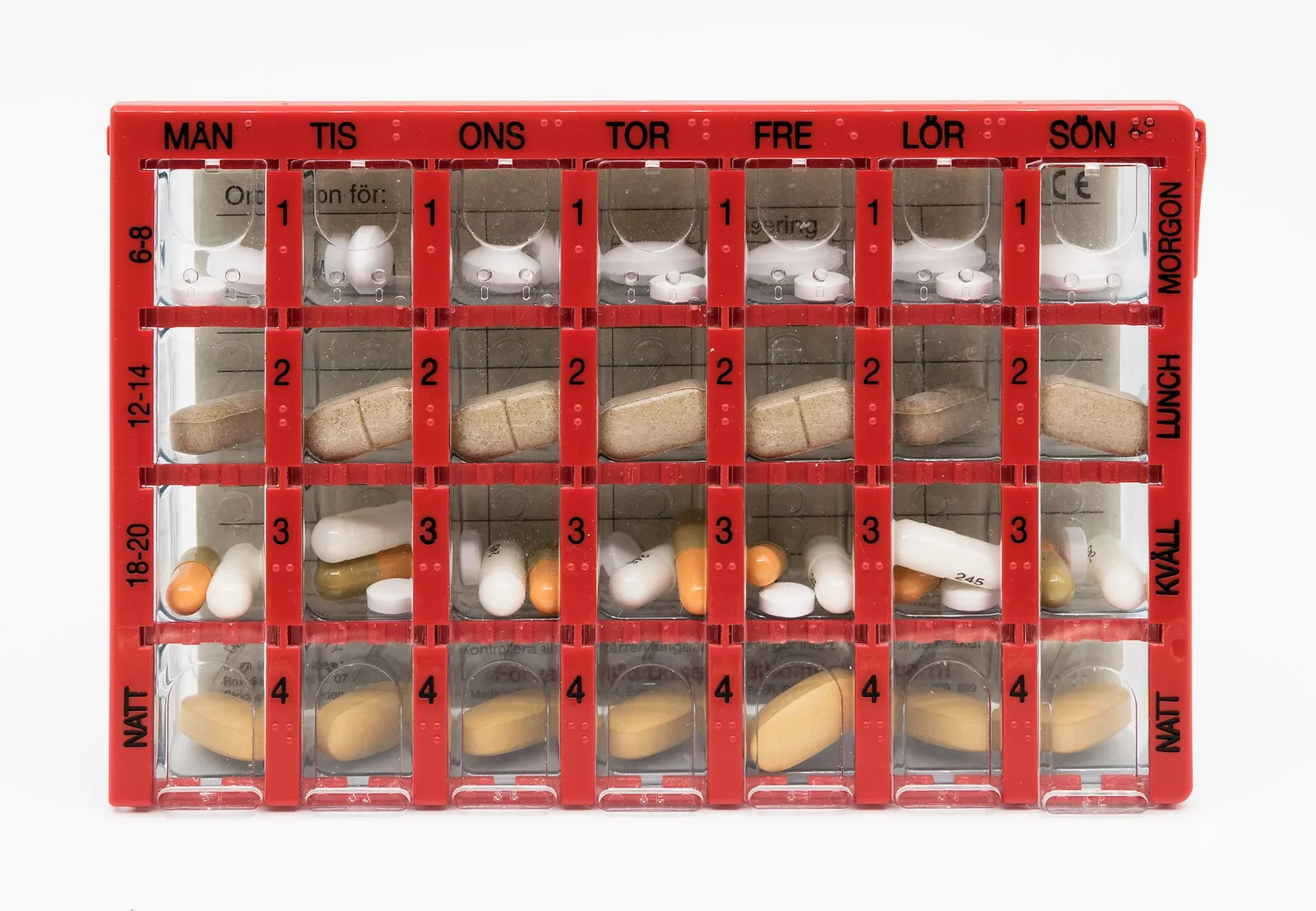
Take your medicine fully as prescribed; don't stop because you feel better
Contested Value for cost High
In plain termsPeople who take all their medicine as the doctor says are only about half as likely to die over the same period as people who take it on and off. This number should be discounted. People who took even a fake pill fully as directed also had lower death rates, which shows that part of the benefit comes from “people who can stick with their medicine already take better care of their health.” But the harm of stopping medicine is certain, especially for blood pressure drugs, anticoagulants and anti-rejection drugs.
- Cost
- Free, and it actually saves the money you would later spend treating complications. Taking the pills takes no more than a few minutes a day; the hard part is taking them every day without missing one.
No money
Done in passing
Lots of willpower
Benefit size large
- Benefit
- Pooling 21 studies and 46847 people (a meta-analysis): compared with people who took their medicine on and off, people who took it fully as prescribed were about 44% less likely to die over the same period. The raw figure is an odds ratio of 0.56, 95% CI 0.50–0.63 (confidence interval). Looking only at treatments that really work, it was about 45% lower (0.55, 0.49–0.62).
- Evidence grade
- A
- Notes
- Contested. This is also the number in this book that most needs to be discounted. In the same pooled analysis, people who took even a placebo (fake pill) fully as directed also had lower death rates (0.56, 0.43–0.74). This shows that a substantial part of the benefit comes from “people who can stick with their medicine already take better care of their health.” The authors call this mixed-in factor the healthy adherer effect. But the harm of stopping medicine itself is clear, especially for blood pressure drugs, anticoagulants and anti-rejection drugs.
A
First get certified for outpatient chronic and special diseases, then register for care outside your insured area; then hypertension, diabetes, radiotherapy and chemotherapy, dialysis and anti-rejection treatment can be settled directly away from home
Value for cost Very high
In plain termsHypertension, diabetes, outpatient radiotherapy and chemotherapy for malignant tumors, dialysis for uremia, and anti-rejection treatment after an organ transplant: for these five, you can pay directly with medical insurance at outpatient visits in another place too. You don't have to pay up front yourself and then claim reimbursement back where you are insured. But you must first get certified for outpatient chronic and special diseases (门诊慢特病) where you are insured, and then register for medical treatment outside your insured area. Only doing both works.
- Cost
- Free. Before you leave, register once for medical treatment outside your insured area (异地就医备案) in the medical insurance (医保) app; it can be done on your phone.
No money
Done in passing
No willpower
Benefit size large
- Benefit
- A document from the National Healthcare Security Administration says this has already been achieved. The original wording is “basically achieve county-level accessibility of direct cross-provincial settlement of costs for 5 outpatient chronic and special diseases, including hypertension, diabetes, outpatient radiotherapy and chemotherapy for malignant tumors, dialysis for uremia, and anti-rejection treatment after organ transplantation.” “County-level accessibility” means it can be done at the county level. On top of these 5, the document also adds 5 more.
- Evidence grade
- A
- Notes
- The precondition is that both things are done: first get certified for outpatient chronic and special diseases where you are insured, then register for medical treatment outside your insured area. How far the 5 newly added conditions have been rolled out varies from place to place; go by what your local medical insurance department announces.
C
Go for follow-up checks at the intervals your doctor sets, and record each result in the same notebook
Value for cost Standard
In plain termsWith a chronic illness, what matters is the change over a period of time, not the value on any one occasion. Record the date, the test values, the medicines you were taking then and their doses in the same notebook. Bring it out when you change hospitals, and you won't have to redo the tests and pay for them all over again.
- Cost
- Each check costs from a few dozen to a few hundred yuan. A trip to the hospital plus waiting for results takes a bit of time. The hard part is that you have to go every so often, and it is easy to keep putting it off.
A little money
Done in passing
Some willpower
Benefit size medium
- Benefit
- For a chronic illness, what you need to look at is how the values change over a period of time; looking at any one occasion is not enough. Keeping records in one place has another benefit: when you change hospitals you don't have to repeat tests, or pay again.
- Evidence grade
- C
- Notes
- Each time, record at least four things: the date, the test values, the medicines you were taking then, and their doses. Taking photos of lab reports with your phone also works, but keep them all in one place, not one here and one there.
- Sources
- 作者经验,无直接文献
C
Don't stop standard treatment to try folk remedies or health products
Value for cost High
In plain termsThe harm of stopping medicine is certain; the benefit of folk remedies and health products is uncertain. That amounts to trading a certain loss for an uncertain benefit. If you want to try a supplement, tell your attending doctor first. Some supplements affect the blood levels of anticoagulants and anti-rejection drugs.
- Cost
- Free, and it saves the money you would spend on health products. It takes no time. The hard part is holding firm when other people keep urging you to try something.
No money
Done in passing
Lots of willpower
Benefit size large
- Benefit
- The harm of stopping medicine is certain; the benefit of folk remedies is uncertain. Section 6 of this book lists a batch of common categories that don't work.
- Evidence grade
- C
- Notes
- If you want to try a supplement, tell your attending doctor first. Some supplements interact with prescription drugs, for example by affecting the blood levels of anticoagulants and anti-rejection drugs.
- Sources
- 作者经验,无直接文献;相关证据见第 6 节
A
With a stable chronic illness, get up to 12 weeks of medicine at a time from a community hospital
Value for cost High
In plain termsPeople whose condition is stable and whose medicines haven't changed can get enough medicine for 12 weeks at a time at a community health center. That saves the half day each month of going to a big hospital and back and queuing to register. Within the same insured area, the reimbursement rate for a stay in a primary-level hospital is also usually about ten percentage points higher than at the next level up.
- Cost
- Free. Ask at the community health center whether they can write you a long-term prescription; it takes one sentence.
No money
Done in passing
No willpower
Benefit size medium
- Benefit
- No monthly trips to a big hospital and back to queue for medicine. Within the same insured area (also called the pooling region), the reimbursement rate for a stay in a primary-level hospital is in principle about 10 percentage points higher than at the next level up.
- Evidence grade
- A
- Notes
- Whether you “meet the conditions” is for the doctor to judge; usually it means people whose diagnosis is already clear and whose medication plan is also stable. The medicine is the same medicine; what you save is the half day of a monthly trip and the registration fee. If the primary-level facility doesn't have the drug you need, ask whether they have shortage registration and delivery. The same document also requires tertiary hospitals to gradually cut general outpatient clinics for chronic illnesses like these, and to move the same experts' general outpatient clinics out to the community. If you keep treating a big hospital as the place to get your prescriptions, it will get harder and harder to get an appointment.
A
Before signing up with a family doctor in your community, ask which services are covered by medical insurance and which you pay for yourself
Value for cost High
In plain termsUnder the rules, the basic service package for signed-up patients goes through medical insurance. The cost of a personalized service package is entirely out of your own pocket. When someone pitches you an “upgrade package,” first ask clearly whether it is the basic package or a personalized package, whether it has been filed, and how much it costs a year.
- Cost
- Free. Ask one more question before signing; it takes a minute.
No money
Done in passing
No willpower
Benefit size medium
- Benefit
- Under the rules, the basic service package is paid for by medical insurance. The cost of a personalized service package is entirely paid by you, and this kind of package must also be filed with the county-level health department.
- Evidence grade
- A
- Notes
- The value of signing up lies in having someone follow your illness over the long term, not in how many services are bundled in. When someone pitches an “upgrade package,” ask three questions first: is this the basic package or a personalized package, has it been filed, and how much does it cost a year.
A
Once diagnosed with diabetes, get your fundus (back of the eye) checked once, then at the intervals your doctor sets; have your feet checked once a year
Value for cost High
In plain termsWhen diabetes damages the back of the eye or the feet, you feel almost nothing before it gets so bad that you can't see or the feet start to rot. Caught early, it can still be treated. With type 2 diabetes, get a dilated fundus exam at the time of diagnosis; with type 1, start checking 5 years after onset. If one or two exams have found nothing and your blood sugar is on target, you can space them out to once every one to two years. Have your feet checked every year.
- Cost
- A dilated fundus exam costs from a few dozen to a few hundred yuan per exam. A foot exam is usually included in the outpatient visit at no extra cost. The hard part is remembering to go even when neither your eyes nor your feet bother you.
A little money
Done in passing
Some willpower
Benefit size large
- Benefit
- Diabetes damage to the back of the eye is called retinopathy; damage to the feet is called diabetic foot. Both cause almost no symptoms before problems appear. Caught early, they can still be treated. By the time you can't see or your feet are rotting, it is too late.
- Evidence grade
- A
- Notes
- With type 2 diabetes, get checked at diagnosis; with type 1, checks only start 5 years after onset. The difference is that in type 2, levels have often already been quietly high for several years. If one or two exams have found nothing and your blood sugar is on target, you can space them out to once every 1 to 2 years. People whose feet have lost some feeling should look at the soles of their feet themselves every day; using a mirror is fine.
- Sources
- 美国糖尿病学会 (2026). 糖尿病诊疗标准 2026·第 12 章 视网膜病变、神经病变与足部护理. Diabetes Care:「People with type 2 diabetes should have an initial dilated and comprehensive eye examination by an ophthalmologist or optometrist at the time of the diabetes diagnosis.」「Adults with type 1 diabetes should have an initial dilated and comprehensive eye examination by an ophthalmologist or optometrist 5 years after the onset of diabetes.」「If there is no evidence of retinopathy from one or more annual eye exams and glycemic indicators are within the goal range, then screening every 1–2 years may be considered.」「Perform a comprehensive foot evaluation at least annually to identify risk factors for ulcers and amputations.」https://doi.org/10.2337/dc26-S012
A
If you've had kidney stones, drink 2.5–3 liters of water a day and cut salt to 6 grams or less
Value for cost High
In plain termsAmong people who have had a calcium stone for the first time, if they do nothing, about one in four will grow another within five years. Among those who drink enough water every day, only a little over one in ten have a recurrence within five years, a reduction of more than half. The British guideline's amount is 2.5 to 3 liters of water a day and no more than 6 grams of salt.
- Cost
- Free. Make drinking water throughout the day a habit. On days you sweat a lot you need to drink even more; the hard part is remembering every day.
No money
Done in passing
Some willpower
Benefit size large
- Benefit
- A 5-year randomized controlled trial with two groups enrolled 199 patients who had a calcium stone for the first time with no identifiable cause (called idiopathic calcium stones). One group drank at least 2 liters of water a day; the other had no intervention at all. Recurrences within 5 years: 12/99 (12.1%) in the extra-water group, 27/100 (27.0%) in the no-intervention group, P=0.008. The smaller the P value, the more it indicates that the difference between the groups is not due to chance. Average time to recurrence: 38.7±13.2 months versus 25.1±16.4 months, P=0.016. In the 24-hour urine volume measured at the start, stone patients were markedly lower than people without stones: in men, 1,057±238 mL versus 1,401±562 mL (P<0.0001); in women, 990±230 mL versus 1,239±440 mL (P<0.001). NICE guideline NG118, recommendation 1.8.1, advises adults to drink 2.5 to 3 liters of water a day, and children and young people 1 to 2 liters according to age. Add some fresh lemon juice to the water, avoid carbonated drinks, and adults should have no more than 6 grams of salt a day.
- Evidence grade
- A
- Notes
- Recurrence fell by about 55% and it costs nothing, so by this book's ranking rules this is the item with the best value for cost in this section. What to watch is the 24-hour urine volume, with a target of 2 to 2.5 liters or more, not how much you drink. People who sweat a lot and people who work in hot environments need to drink more. That trial studied patients with a first episode of idiopathic calcium stones. Stones come in more than one composition; uric acid stones, infection stones and cystine stones each have their own measures. For people who have had a recurrence, it is worth getting a stone composition analysis and a 24-hour urine test once, and then deciding whether to add medication. Don't cut out calcium to prevent stones; see Section 6, Item 21. If you have severe colicky pain in the lower back or abdomen during an attack, go to the hospital; it isn't something you flush out by drinking more water. Painless blood in the urine calls for other checks; see Section 1, Item 27.
A
Once diagnosed with gout, take urate-lowering medicine long term, bring blood uric acid below 360 µmol/L and keep it there
Contested Value for cost Standard
In plain termsGout calls for long-term urate-lowering medicine to bring uric acid below 360 µmol/L; you can't just take painkillers when it hurts. Among patients whose dose was adjusted with a nurse's help according to lab results, 95% were on target after two years, versus only 30% of those with usual care. Even after reaching the target, you can't stop the medicine. Diet restrictions won't get you below this line; even giving up alcohol only lowers it by 1.6 mg/dL.
- Cost
- Allopurinol costs from a few yuan to a few dozen yuan a month. At first, blood uric acid is checked every few weeks to adjust the dose; once stable, every few months. For the first 3 to 6 months you also take a drug to prevent flares at the same time. The hard part is that you have to keep taking it even when nothing hurts.
A little money
Done in passing
Lots of willpower
Benefit size large
- Benefit
- A randomized controlled trial with two groups enrolled 517 adults who had had a flare in the past 12 months. In one group, nurses led care: they explained clearly to patients what the disease is, then adjusted uric acid to target according to the readings. The other group saw their general practitioner as usual. At 2 years, the share with blood uric acid below 360 µmol/L (6 mg/dL) was 95% versus 30%. The likelihood of reaching target was 3.18 times that of the usual-care group (RR 3.18, 95% CI 2.42–4.18; this interval is the confidence interval of the figure), P<0.0001. The secondary outcomes in year 2 (flare frequency, tophi and quality of life) were also all better than in the usual-care group. Each additional year of life adjusted for quality of life (a quality-adjusted life year) cost £5,066. The same trial also had a follow-up study: questionnaires were sent to 438 people and 82% were returned. Both groups self-reported the number of flares in the past 12 months. The median in the treat-to-target group was 0 flares (the middle half fell within 0–0). In the usual-care group it was 1 (0–3), P<0.001. The range in parentheses is called the interquartile range. The share still taking urate-lowering medicine was 1.19 times as high in the treat-to-target group as in the usual-care group (adjusted RR 1.19, 1.09–1.30). The American College of Rheumatology 2020 gout guideline strongly recommends starting urate-lowering therapy for three groups: people with tophi under the skin, people whose imaging shows gout has eaten defects into the bone, and people with ≥2 flares a year. The approach is to monitor blood uric acid continuously and adjust the dose according to the results until the target is reached, with a target of <6 mg/dL. Allopurinol is the first choice, and it is also the first choice for people with stage 3 or higher chronic kidney disease, at a starting dose of ≤100 mg/day. When starting, anti-inflammatory preventive medication is given at the same time, taken for at least 3 to 6 months. The same guideline also cites a case series. These patients stopped their medicine after long-term good control, and after stopping, their blood uric acid stayed <7 mg/dL. Of them, only 13% (27/211) had no flare at all during 5 years of follow-up. On diet: people who limit or give up alcohol have blood uric acid 1.6 mg/dL lower than people who don't, and one serving of beer raises blood uric acid by 0.16 mg/dL. Healthy diets, the Mediterranean diet and the DASH diet have smaller effects. There is disagreement over which urate-lowering drug should be first choice. The American College of Rheumatology guideline strongly recommends allopurinol as first choice, on the grounds that at an adequate dose it is effective, well tolerated, safe and cheap. It also conditionally recommends that people taking febuxostat who have a history of cardiovascular disease, or a new cardiovascular event, switch to another drug if one is available. This recommendation is consistent with the boxed warning the FDA added to febuxostat. One basis is the CARES trial, in which 6190 gout patients with cardiovascular disease were randomized to febuxostat or allopurinol. The risk of death from any cause in the febuxostat group was 1.22 times that of the allopurinol group (HR 1.22, 95% CI 1.01–1.47, about 22% higher). For cardiovascular death it was 1.34 times (1.03–1.73, about 34% higher). The European FAST trial reached a different conclusion. It enrolled 6128 patients over 60 with cardiovascular risk factors, and major cardiovascular events were no more frequent with febuxostat than with allopurinol (HR 0.85, 0.70–1.03). Deaths were 7.2% in the febuxostat group and 8.6% in the allopurinol group. For people taking drugs that help the kidneys excrete uric acid, the American College of Rheumatology conditionally recommends against alkalinizing the urine, because there is no evidence that it works; the certainty of evidence is very low. It also says these people should be told to drink plenty of water, and that people with known kidney stones or stage 3 or higher chronic kidney disease should not use this type of drug.
- Evidence grade
- A
- Notes
- Contested: guidelines differ between countries on which drug to use to lower uric acid. The US guideline puts allopurinol first and says people with cardiovascular disease should not take febuxostat if they can switch, but the European FAST trial did not find febuxostat more dangerous. In China, benzbromarone is also available; it is a drug that increases uric acid excretion. The Chinese Medical Association's guideline (the 2019 edition and the 2024 update) gives separate recommendations on drug choice and on alkalinizing the urine. On whether to add sodium bicarbonate to alkalinize the urine when taking benzbromarone, the US guideline finds no evidence; follow your doctor's advice, and don't skip drinking plenty of water. For Han Chinese people, it is worth testing for HLA-B*5801 before taking allopurinol. It is an inborn gene type that governs immune responses; test once and the result holds for life. Carriers of this gene make up 7.4% of Han Chinese, Korean and Thai people, but only 0.7% of white and Hispanic people. After taking allopurinol, Asian and African-descent people have 3 times the risk of white people of developing allopurinol hypersensitivity syndrome; in severe cases large areas of skin peel off, and it can kill. The American College of Rheumatology 2020 gout guideline recommends that for these two groups, testing before starting the drug may be considered. Starting to lower uric acid actually makes flares more likely at first, so the guideline explicitly requires taking an anti-inflammatory preventive drug at the same time for the first 3 to 6 months. “The urate-lowering drug made it hurt more, so I stopped” is the most common way this goes wrong. When it hurts, what to do is add anti-inflammatory medicine as prescribed, not stop the urate-lowering drug. Targets are written differently by different sources: <6 mg/dL is about 360 µmol/L, and lab reports in China mostly use µmol/L. High uric acid found at a checkup with no flare ever is a different matter; see Section 6, Item 19. For sugary drinks and alcohol, see Section 2, Items 7 and 19 (no sugary drinks; drink little or no alcohol).
- Sources
- Doherty M, Jenkins W, Richardson H, et al. (2018). Efficacy and cost-effectiveness of nurse-led care involving education and engagement of patients and a treat-to-target urate-lowering strategy versus usual care for gout: a randomised controlled trial. Lancet, 392(10156), 1403-1412. https://doi.org/10.1016/S0140-6736(18)32158-5;Abhishek A, Jenkins W, La-Crette J, Fernandes G, Doherty M (2020). Nurse-led care is preferred over GP-led care of gout and improves gout outcomes: results of Nottingham Gout Treatment Trial follow-up study. Rheumatology, 59(3), 575-579. https://doi.org/10.1093/rheumatology/kez333;FitzGerald JD, Dalbeth N, Mikuls T, et al. (2020). 2020 American College of Rheumatology Guideline for the Management of Gout. Arthritis Care & Research, 72(6), 744-760. https://doi.org/10.1002/acr.24180;White WB, Saag KG, Becker MA, et al.; CARES Investigators (2018). Cardiovascular Safety of Febuxostat or Allopurinol in Patients with Gout. New England Journal of Medicine, 378(13), 1200-1210. https://doi.org/10.1056/NEJMoa1710895;Mackenzie IS, Ford I, Nuki G, et al.; FAST Study Group (2020). Long-term cardiovascular safety of febuxostat compared with allopurinol in patients with gout (FAST): a multicentre, prospective, randomised, open-label, non-inferiority trial. Lancet, 396(10264), 1745-1757. https://doi.org/10.1016/S0140-6736(20)32234-0;中华医学会内分泌学分会 (2020). 中国高尿酸血症与痛风诊疗指南(2019). 中华内分泌代谢杂志, 36(1), 1-13. https://doi.org/10.3760/cma.j.issn.1000-6699.2020.01.001